1
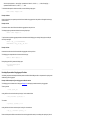
If we look only at the projection on S, then specifying S represents the set of values for S, for which emp(I,N,S) holds, while specifying S,I
represents the multiset of values for S, for which emp(I,N,S) holds.
To check whether the expenses for salaries exceed 4500, we can use the following simple program:
warning :- #sum{S,I : emp(I,N,S)} > 4500.
Example 2-32. #times
#times is similar to #sum, but computes the product of the first local variable to be aggregated over in the symbolic set. When applied over the empty
set, #times returns 1.
Example 2-33. #min
#min returns the minimum value of the first local variable to be aggregated over in the symbolic set.
The following simple program then returns the lowest income among all employees.
lowest(X) :- #min{S : emp(I,N,S)} = X.
To perform the same query without aggregate predicates we would need to write the following program consisting of the query plus an auxiliary rule
which is by far less elegant.
lowest(X) :- emp(_,_,X), not existsLowerThan(X).
existsLowerThan(W) :- emp(_,_,W), emp(_,_,W1), W1 < W.
Example 2-34. #max
#max returns the maximum value of the first local variable to be aggregated over in the symbolic set.
The following program computes the maximum income earned in the company
highest(X) :- #max{S : emp(I,N,S)} = X.
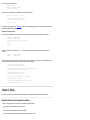
Running this program with DLV generates the following output:
$ DLV -nofacts employees query6.dl
{highest(1250)}
Knowledge Representation Using Aggregate Predicates
In the following we present several examples of well-known problems in the field of Artificial Intelligence which can be represented in a very elegant and
readable way by means of aggregates.
Example 2-35. Minimum Spanning Tree with Aggregates and Weak Constraints
The following program is an alternate version of the program Example 2-16, where integrity constraints are rewritten by using aggregates.
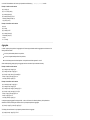
The strong constraint
:- root(X), in_tree(_,X,C).
ensuring that "the root of a tree should not have any incoming arc" can be rewritten as follows
:- root(R), not #count{X : in_tree(X,R,C)} = 0.
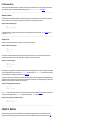
The constraint
:- in_tree(X,Y,C), in_tree(Z,Y,C), X != Z.
ensuring that "each node in the tree must have only one incoming arc" can be rewritten as
:- edge(_,Y,_), not #count{X : in_tree(X,Y,_)} = 1.
Please note that the previous definition ensures also that "each node in the graph should be reached (i.e. must belong to the spanning tree)", hence in