1
Point 1
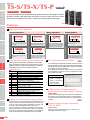
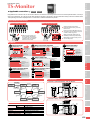
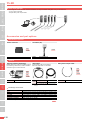
Optimal setup
Setting the parameters is simple
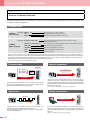
Robot controllers are designed in-house for YAMAHA robots. Optimal values for servo parameters required for operating the robot such as
gain are stored beforehand in the robot.
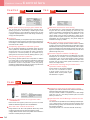
Setting acceleration/deceleration is easy
The acceleration/deceleration is a critical factor in determining the machine service life. Setting the acceleration too high will shorten the
machine service life, while setting it too low will prevent effective use of motor power and lower the tact time. The acceleration/deceleration
on YAMAHA robot controllers is determined to a fine degree for each model by the payload. By simply entering payload parameters,
acceleration and deceleration rates will be automatically optimised to provide suffiecent robot service life and motor performance. Detailed
robot knowledge from YAMAHA is what makes this possible. Moreover, SCARA robots are also equipped with zone control function that
constantly delivers maximum performance that takes into account fluctuations in inertia due to the state of the arm (folded/extended).
(Note. On pulse train input types the acceleration/deceleration must be set by the customer.)
Point 2
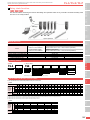
Multi-functions and expandability
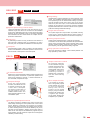
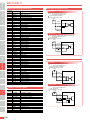
Multi-axis controllers support up to 10,000 points, and single-axis controllers up to 1,000 points (255 points on the TS series). Up to
100 programs can be made on either type controller.
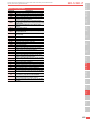
Supports various field networks including CC-Link, DeviceNet, Profibus, Ethernet, EtherNet/IP Note.
Note. Some models do not support all networks.
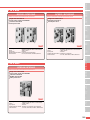
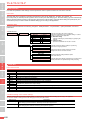
The TS series, RD series, SR1 series, and RCX series utilize a dual power supply system where the control power supply and (main)
power supply are separate.
Controllers support CE markings for EU (European) safety standards and so can also be used with confidence overseas. The TS
series (except for TS-S), SR1 series, and RCX series can support safety category 4.
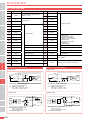
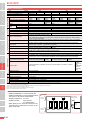
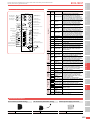
To view detailed information on each controller’s functions see the controller specification pages from P.391.
31