1
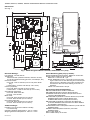
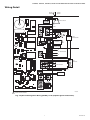
S9360A, S9361A, S9380A, S9381A INTEGRATED BOILER CONTROLLERS
Frequent Cycling
14,000,485-016 1/4 in. (6.35 mm) diameter, 1-1/4 in.
(31.75 mm) length glass cartridge Fuse, 1 A,
Slow-Blow.
120650 Heat Conductive Compound.
These controls are designed for use on domestic and
commercial boiler systems that typically cycle less than
10,000 cycles per year. In an application with significantly
greater cycling rates, we recommend monthly checkout
because the controls may wear out more quickly.
Table 1. Wells for Controller.
Part
Number
Spud Size
in. (mm)
123869A 1/2 (12.7) NPT
Insertion
in. (mm)
Insulation
in. (mm)
3 (76.2)
1-1/2 (38.1)
123870A 3/4 (19.05) NPT 3 (76.2)
1-1/2 (38.1)
Water or Steam Cleaning
Once a module or gas control has been wet, it may
operate unreliably and must be replaced. If the appliance
is likely to be cleaned with water or steam, the controls
and associated wiring should be covered so that water or
steam cannot reach them. The controls should be high
enough above the bottom of the cabinet so they will not be
subjected to flooding or splashing during normal cleaning
procedures. If necessary, shield the controls to protect
them from splashing water. A NEMA 4 enclosure is
recommended.
Table 2. Sensors for Controller.
Part Number
50001464-001
Length in.
(mm)
Application
12 (304.8)
Well-mounted controls
50001464-003
24 (609.6)
Flush-mounted controls
50001464-004
36 (914.4)
50001464-005
48 (1219.2)
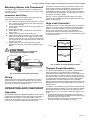
High Humidity or Dripping Water
Over time, dripping water or high ambient humidity can
create unwanted electrical paths on the module circuit
board, causing the module to fail. Never install an
appliance where water can drip on the controls.
Ignition Cables:
32004766-012—36-in. standard ignition cable (one end
with 90° boot, and other end with 1/4-in. quick connect).
Use cable types recommended in Table 3.
In addition, high ambient humidity can cause the control
to corrode and finally fail.
Table 3. Recommended Ignition Cables.
Cable Type
Voltage
Rating (rms)
Where the appliance may be installed in a humid
atmosphere, make sure air circulation around the module
and gas control is adequate to prevent condensation. It is
also important to regularly check out the system. A NEMA
4 enclosure may be needed.
Temperature Rating
°C
°F
UL Style 3217
10,000
150
302
UL Style 3257
10,000
250
484
Corrosive Chemicals
Transformer Requirement:
Add current ratings of module, pilot valve, main valve, vent
damper and any other components of the control system to determine transformer size requirement.
The AT150B1260—commonly used 50 VA transformer.
Corrosive chemicals can also attack the module and gas
control and eventually cause a failure. Where chemicals
may be used routinely for cleaning, make sure the
cleaning solution cannot reach the controls. Where
chemicals are likely to be suspended in the air, as in some
industrial and agricultural applications, protect the module
from exposure with a NEMA 4 enclosure.
Approvals:
Varies with control model.
ANSI Z21.20 Automatic Gas Ignition Systems and
Components.
ANSI Z21.23 Gas Appliance Thermostats.
EN298: Automatic Gas Burner Control Systems
ANSI Z21.87: Automatic Gas Shutoff Devices for Hot
Water Supply Systems.
UL353 Limit Controls.
Dust or Grease Accumulation
Heavy accumulation of dust or grease may cause the
controls to malfunction. Where dust or grease may be a
problem, provide covers for the module and gas control
that limit environmental contamination. A NEMA 4
enclosure is recommended for the module.
INSTALLATION
Heat
Automatic Ignition Control domestic and commercial
boiler systems are used on a wide variety of equipment.
Some of these applications may make heavy demands on
the controls, either because of frequent cycling, or
because of moisture, corrosive chemicals, dust or
excessive heat in the environment. In these situations,
special steps may be required to prevent nuisance
shutdowns and premature control failures. These
applications require Honeywell Engineering review;
contact your Honeywell Sales Representative for
assistance.
The controls can be damaged by excessively high
temperatures. Make sure the maximum ambient
temperature at the control locations will not exceed the
rating of the control. If the appliance normally operates at
very high temperatures, insulation, shielding, and air
circulation may be necessary to protect the controls.
Proper insulation or shielding should b provided by the
appliance manufacturer; make sure adequate air
circulation is maintained when the appliance is installed.
3
66-1203—03