1
3.
CONSTRUCTION
3.1) Hull:
The hull is molded as a single unit of a combination of polyester resin and fiberglass woven roving and
multi-directional chopped strand fiber (MCSF). The keel is molded integrally with the hull and all
ballast is contained inside. The exterior finish is a pigmented gelcoat molded onto the fiberglass. The
boot and sheer stripe are also gelcoat molded permanently into the hull.
3.2) Deck:
The deck and cockpit, like the hull, are molded as a single unit of a combination of polyester resin and
fiberglass woven roving and MCSF. Plywood coring is incorporated between layers of fiberglass in the
cabin top, deck, seat, and cockpit sole areas to give additional stiffness. The non-skid finish is molded
into the deck. All exterior deck surfaces are a pigmented gelcoat molded onto the fiberglass.
3.3) Deck/Hull Joint:
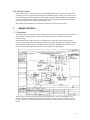
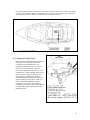
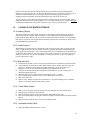
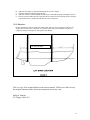
The joint between the hull and deck is one of the
most important assembly steps in the construction of
a yacht. The method used by Endeavour Yacht is
simple, strong, and reliable. Figure #1 illustrates
details of this assembly.
During assembly, the top of the integral hull flange is
liberally coated with a combination adhesive/sealant.
The deck is then lowered onto the hull and fastened
in place with stainless steel bolts. When the bolts are
tightened, the excess compound is forced into all
crevices and out the sides. The teak cap is then
installed, bedded in a heavy layer of the same
compound and secured in place, doubly ensuring
water tightness.
3.4) Rudder and Steering:
The rudder is molded as a single piece of solid high
density foam with a protective skin of fiberglass and
a gelcoat finish. The foam material is of high
strength structural grade and has exceptional
toughness. The rudder post, molded integrally inside
4