1
Technical basics
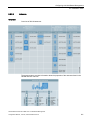
3.8 Spanning Tree
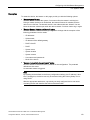
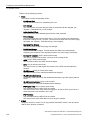
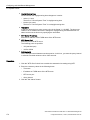
The management station sends data packets of the following type:
● GET
Request for a data record from the agent
● GETNEXT
Calls up the next data record.
● GETBULK (available as of SNMPv2)
Requests multiple data records at one time, for example several rows of a table.
● SET
Contains parameter assignment data for the relevant device.
The SNMP agent sends data packets of the following type:
● RESPONSE
The agent returns the data requested by the manager.
● TRAP
If a certain event occurs, the SNMP agent itself sends traps.
SNMPv1 and SNMPv2 and SNMPv3 use UDP (User Datagram Protocol). The data is
described in a Management Information Base (MIB).
SNMPv3
Compared with the previous versions SNMPv1 and SNMPv2. SNMPv3 introduces an
extensive security concept.
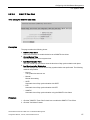
SNMPv3 supports:
● Fully encrypted user authentication
● Encryption of the entire data traffic
● Access control of the MIB objects at the user/group level
3.8
Spanning Tree
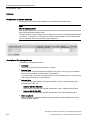
Avoiding loops
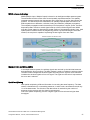
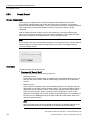
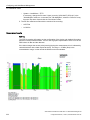
The Spanning Tree algorithm detects redundant physical network structures and prevents
the formation of loops by disabling redundant paths. It evaluates the distance and
performance of a connection or bases the decisions on settings made by the user. Data is
then exchanged only over the remaining connection paths.
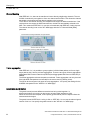
If the preferred data path fails, the Spanning Tree algorithm then searches for the most
efficient path possible with the remaining nodes.
SCALANCE W770/W730 to IEEE 802.11n Web Based Management
38
Configuration Manual, 11/2014, C79000-G8976-C323-03