1
configuration is suitable if the Web servers serve only static Web content (consisting of small
amounts of infrequently changing data), a two-tier configuration is not suitable if the Web
servers serve dynamic content. Dynamic content could include product inventory, purchase
orders, or customer databases, which must be consistent on all the Web servers to ensure that
customers have access to up-to-date and accurate information.
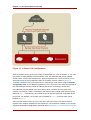
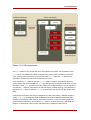
Each tier provides the following functions:
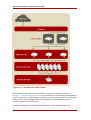
• First tier — LVS routers performing load-balancing to distribute Web requests.
• Second tier — A set of Web servers to serve the requests.
• Third tier — A Red Hat Cluster to serve data to the Web servers.
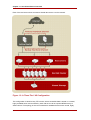
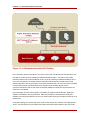
In an LVS configuration like the one in Figure A.1, “LVS with a Red Hat Cluster”, client systems
issue requests on the World Wide Web. For security reasons, these requests enter a Web site
through a firewall, which can be a Linux system serving in that capacity or a dedicated firewall
device. For redundancy, you can configure firewall devices in a failover configuration. Behind
the firewall are LVS load-balancing routers, which can be configured in an active-standby mode.
The active load-balancing router forwards the requests to the set of Web servers.
Each Web server can independently process an HTTP request from a client and send the
response back to the client. LVS enables you to expand a Web site's capacity by adding Web
servers behind the LVS routers; the LVS routers perform load balancing across a wider set of
Web servers. In addition, if a Web server fails, it can be removed; LVS continues to perform
load balancing across a smaller set of Web servers.
59