1
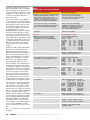
Table 2
ICOM IC-9100, serial number 02001053
Key Measurements
Summary
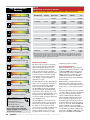
ARRL Lab Two-Tone IMD Testing (500 Hz DSP bandwidth, 3 kHz roofing filter)‡
Band/Preamp Spacing Input Level
Measured
IMD Level
Measured
IMD DR
Calculated
IP3
3.5 MHz/Off
20 kHz
–26 dBm
–13 dBm
–134 dBm
108 dB
–97 dBm
+28 dBm
+29 dBm
14 MHz/Off
20 kHz
–25 dBm
–13 dBm
0 dBm
–133 dBm
108 dB
–97 dBm
–63 dBm
+29 dBm
+29 dBm
+32 dBm
14 MHz/1
20 kHz
–35 dBm
–20 dBm
–141 dBm
106 dB
–97 dBm
+18 dBm
+19 dBm
108
14 MHz/2
20 kHz
–42 dBm
–27 dBm
–143 dBm
101 dB
–97 dBm
+9 dBm
+8 dBm
108 110
14 MHz/Off
5 kHz
–37 dBm
–26 dBm
0 dBm
–133 dBm
96 dB
–97 dBm
–23 dBm
+11 dBm
+10 dBm
+12 dBm
14 MHz/Off
2 kHz
–46 dBm
–31 dBm
0 dBm
–133 dBm
87 dB
–97 dBm
–18 dBm
–2 dBm
+2 dBm
+9 dBm
50 MHz/Off
20 kHz
–20 dBm
–13 dBm
–130 dBm
110 dB
–97 dBm
+35 dBm
+29 dBm
144 MHz/2
20 kHz
–47 dBm
–34 dBm
–143 dBm
96 dB
–97 dBm
+1 dBm
–2 dBm
430 MHz/2
20 kHz
–50 dBm
–36 dBm
–144 dBm
94 dB
–97 dBm
–3 dBm
–5 dBm
50
101
20 60
140
20 kHz Reciprocal Mixing Dynamic Range
141*
%*
142*
20 70
140
20 kHz Blocking Gain Compression (dB)
,
20 50
20 kHz 3rd-Order Dynamic Range (dB)
50
60
2
77
140
2 kHz Reciprocal Mixing Dynamic Range
111
%*
111
70
2
140
2 kHz Blocking Gain Compression (dB)
,
87
50
2
‡ARRL
Product Review testing now includes Two-Tone IMD results at several signal levels. on the first
line in each group. The “IP3” column is the calculated third-order intercept point. Intercept points were
determined using –97 dBm reference. Receiver IMD not measured at 1296 MHz due to lack of third
signal generator capable of operation above 1 GHz.
110
2 kHz 3rd-Order Dynamic Range (dB)
29
,
29 +35
20 -40
20 kHz 3rd-Order Intercept (dBm)
,
2
2
-40
+30
2 kHz 3rd-Order Intercept (dBm)
,
TX -20
-29
Transmit 3rd-Order IMD (dB)
-35
,
TX -20
-64
-70
Transmit 9th-order IMD (dB)
pr067
Key:
* Off Scale
80 M
Dynamic range and intercept
values with preamp off.
Intercept values were determined
using -97 dBm reference
20 M
See the digital edition and the
QST-in-Depth website (www.arrl.
org/qst-in-depth) for the VHF/UHF
measurements summary.
54 April 2012
Window on the World
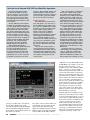
The main receiver’s frequency and settings
appear in the top half of the commodious
monochrome display, the sub receiver’s
frequency and settings in the bottom half.
Only one-half of the display can handle
transmit frequency readout and settings. The
receivers’ frequency readouts are sizeable
and extremely easy to see from across the
room. Display contrast and brightness are
adjustable via a menu.
something appeared or vanished.
I found it difficult to read the rather light “dot
matrix” type text presented in the menu area
along the bottom of the display. Its limitations were especially noticeable while
decoding RTTY signals using the built-in
decoder. Selecting the desired first IF filter
via this menu can be a bit tricky, too, as this
involves pressing and holding a button to step
through the choices. These filters sure are
nice to have, though; I’d suggest setting these
up to defaults by mode.
While sensitivity is an important receiver
performance metric, all of today’s amateur
transceivers hear well. This shifts the focus to
dynamic range as a more significant parameter.
Since IC-9100 users are more likely to be
using the main and sub receivers in tandem,
the tiny (but clearer and darker) legends on
the display screen may be hard to see. In
some cases, these too-subtle readouts provide
the only means of knowing a particular
feature is enabled. In a few cases I had to
toggle the feature on and off, to see where
ARRL – the national association for Amateur Radio
Let’s Do the Numbers!
The IC-9100 delivers the same competent
performance we experienced with the ’7410
on HF and 50 MHz and more than merely
commendable performance on VHF and
UHF. It is that latter capability that anyone
considering the purchase of an IC-9100
should care about; if not, the IC-7410 might
be a better option.
Dynamic range numbers, in general, quantify
a receiver’s ability to perceive weak signals in
the vicinity of strong signals (see sidebar,
“Reciprocal Mixing Testing: What Is It?”
which explains the subtleties of the various
shades of dynamic range). How does the
IC-9100 stack up in those higher reaches of
the Amateur Radio spectrum? Quite well, as
it turns out. A two tone, third order IMD DR
number of 100 dB or greater (at 20 kHz
spacing) once was considered the hallmark of
a quality HF receiver. The IC-9100 tops that
benchmark at 50 MHz by 10 dB and it comes
pretty close at 144 MHz and at 430 MHz.
www.arrl.org