1
IZMX circuit-breakers, INX switch-disconnectors
8
IZMX circuit-breakers, INX switch-disconnectors
IZMX16, INX16, IZMX40, INX40
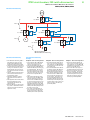
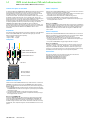
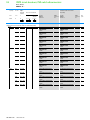
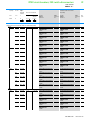
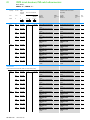
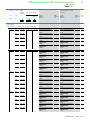
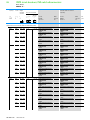
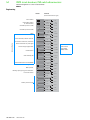
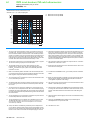
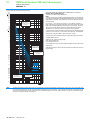
Zone Selective Interlocking
IZMX circuit-breakers, INX switch-disconnectors
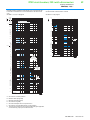
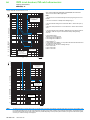
CB 1
ZSI
tsd = 300 ms
Zone 1
1
CB 2
CB 3
ZSI
tsd = 200 ms
Zone 2
tsd = 200 ms
ZSI
2
M
CB 4
tsd = 100 ms
CB 5
ZSI
tsd = 100 ms
ZSI
Zone 3
3
CB = Circuit Breaker
ZSI = Zone Selective Interlocking
Zone Selective Interlocking
Zone Selective Interlocking
Example
• Zone Selective Interlocking (ZSI) is
described in the soon to be published standard IEC 61912-2 Low
voltage switchgear and controlgear.
• The term zone selective interlocking
is used to describe a method of controlling circuit breakers to provide
selectivity with very short interruption times for the breaker closest to
the fault.
• There are different levels (zones) of
protection that isolate the fault in
the distribution system.
• ZSI may be applied for faults between phases or earth-faults or
both.
• ZSI is applied to the short time faults
where time selectivity can be
achieved with the breakers between the zones.
• Because ZSI does not require auxiliary power or additional modules to
operate set up time is minimal and
application is easy.
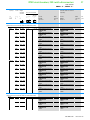
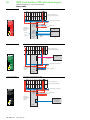
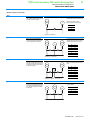
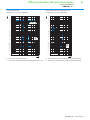
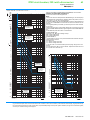
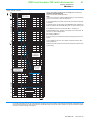
Example A – Short-circuit at position 3
• Circuit-breakers CB1, CB3, CB4 all
see the short circuit current and
register a short delay pick-up.
• Circuit breaker CB4 sends a ZSI output blocking signal to CB3 ZSI input.
CB3 sends a ZSI output blocking signal to CB1 ZSI input. CB1 sends a
ZSI output signal that is not wired.
This signal could be wired to a MV
relay on the other side of the transformer with a compatible ZSI circuitry.
• CB1 registers the ZSI input signal
and starts its timer for 300ms. CB3
registers the ZSI input signal and
starts its timer for 200ms. CB4 gets
no input from any lower zone circuit
breaker. This breaker will then trip
immediately without any time delay.
CB4 interrupts the fault and CB1 and
CB3 stop short delay timing because
the fault current is gone.
• If for some reason CB4 does not
open and interrupt the fault then at
the end of the its short delay time
CB3 will open and interrupt the fault.
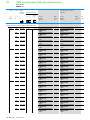
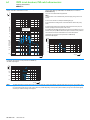
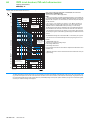
Example B – Short-circuit at position 2
• Circuit-breakers CB1, CB3, see the
short circuit current and register a
short delay pick-up. CB4 and CB5 do
not see the fault current and do not
send a ZSI output.
• Circuit breaker CB3 sends a ZSI output blocking signal to CB1 ZSI input.
CB1 sends a ZSI output signal. In
this example that signal is not wired.
• CB1 registers the ZSI input signal
and starts a timer for 300ms. CB3
gets no input from any lower zone
circuit breaker. This breaker will
then trip immediately without any
time delay. CB3 interrupts the fault
and CB1 stops short delay timing because the fault current is gone. The
clearance time is reduced by approximately 150ms.
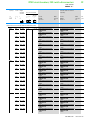
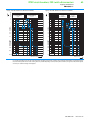
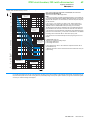
Example C – Short-circuit at position 1
• Only Circuit breaker CB1sees the
short circuit current and registers a
short delay pick-up. CB2, CB3, CB4
and CB5 do not see the fault current
and do not send ZSI outputs.
• CB1 sends a ZSI output signal. In
this example that signal is not wired.
• CB1 gets no input from any lower
zone circuit breaker. This breaker
will then trip immediately without
any time delay. CB1 interrupts the
fault and the clearance time is reduced by approximately 250ms.
CA01305001Z-EN
www.eaton.com