1
ООО "Техэнком"
Контрольно-измерительные приборы и оборудование
www.tehencom.com
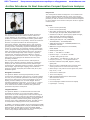
Master the Location of Interference
As the wireless industry continues to expand, more diverse uses for the radio spectrum emerge, and the number
of signals that may potentially cause interference is constantly increasing.
Compounding the problem are the many sources that can generate interference, including intentional radiators,
un-intentional radiators, and self interference. Interference causes Carrier-to-Interference degradation robbing the
network of capacity. The goal of these measurements is to resolve interference issues as quickly as possible.
Interference Analysis (Option 25)
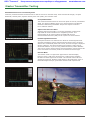
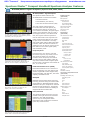
The interference analyzer option provides you with a spectrogram display,
RSSI, signal strength meter, signal ID, and signal mapping capabilities.
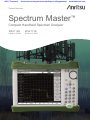
Spectrum Master’s integrated spectrum analyzer can detect signals as
low as –152 dBm.
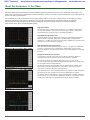
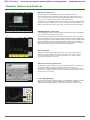
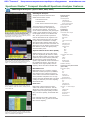
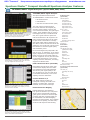
Spectrogram Display
This option provides you with a three-dimensional display of frequency,
power, and time of the spectrum activity to identify intermittent interference
and track signal levels over time. The dual display screen allows for easy
viewing of both the spectrum and 3D display. The Spectrum Master allows
you to save a history of data up to one week.
Spectrogram Display
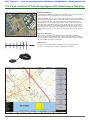
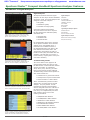
Received Single Strength Indicator (RSSI)
You can use the Spectrum Master’s RSSI measurement to observe the signal
strength of a single frequency over time, and collect data for up to one week.
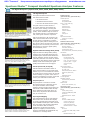
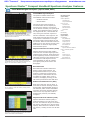
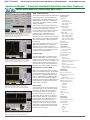
Signal Strength Meter
The Spectrum Master’s signal strength meter can locate an interfering signal
by using a directional antenna and measuring the signal strength. It displays
power in Watts or dBm, in the graphical analog meter display and by an
audible beep proportional to its strength.
Signal Strength Meter
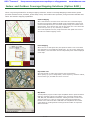
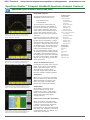
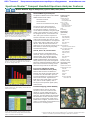
Signal ID
Spectrum Master’s signal ID feature in the interference analyzer can help
you quickly identify the type of the interfering signal. You can configure
this measurement to identify all signals in the selected band or to simply
monitor one single interfering frequency. The Spectrum Master then
displays results that include center frequency, signal bandwidth, and signal
type (FM, GSM/EDGE, W-CDMA/HSPA+, CDMA/EV-DO, Wi-Fi.
Signal ID
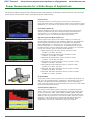
Carrier-To-Interference Measurement
Spectrum Master’s carrier-to-interference measurement capability makes it
simple for you to determine if the level of interference will affect users in the
intended service area.
AM/FM/SSB Demodulation
A built-in demodulator for AM, narrowband FM, wideband FM and single
sideband allows you to easily identify the interfering signal.
Carrier-to-Interference (C/I)
8 of 32