1
WHAT IS A MINIDISC?
The disc is stored in a cartridge. You can handle it easily without worrying about dust, fingerprints, etc.
However, dust entering the opening of the cartridge, dirt on the cartridge, warping, etc. may cause malfunctions. Please
note the following.
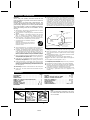
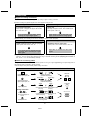
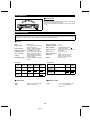
■ To prevent recorded discs from being
■ Handling the MiniDisc
erased accidentally
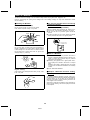
Do not touch the disc directly!
(accidental erasure prevention)
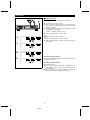
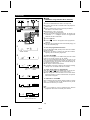
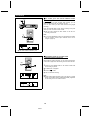
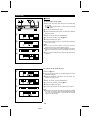
Do not open the shutter or touch the disc directly.
If the shutter is opened forcibly, it may break.
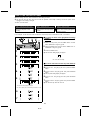
Slide the accidental erase prevention tab, located on the
side of the disc, in the direction indicated by the arrow.
● The disc will then be protected against accidental
erasure.
● To add a recording to such a disc, slide the accidental
erase prevention tab back to its original position.
Disc
Cartridge
Shutter
Tab
Protected against
accidental erasure
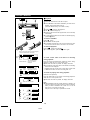
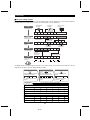
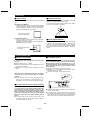
Where not to store discs:
Do not store discs in places with high temperatures or
humidity. Specifically, do not leave discs in places exposed
to direct sunlight or in cars with doors and windows closed.
Do not leave discs in places where sand can get into the
cartridge easily (e.g., beaches).
■ What is a MiniDisc?
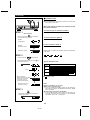
● A MiniDisc is a 2-1/2" (64 mm) diameter disc which is
stored in a cartridge. MiniDiscs are easy to handle, compared to compact discs, because they are protected
against dust and scratches.
● Recording and playback use a digital system with a
sound quality that is similar to that found on compact
discs.
MiniDiscs cannot twist or stretch like tapes. The quality
of sound will not deteriorate. MiniDiscs are extremely
durable.
● Never disassemble MiniDiscs.
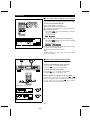
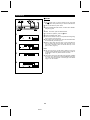
Regular cleaning:
■ Adaptive TRansform Acoustic Coding
If the surface of the cartridge becomes dusty or dirty, clean
it with a dry cloth.
[ATRAC]
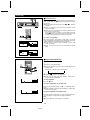
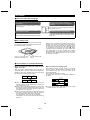
The ATRAC (Adaptive TRansform Acoustic Coding) is a
new technology that is designed to eliminate the information
in sounds which you can not hear and to compress the
remaining sound data so that the recording uses about 1/5
of the original sound information.
Sound data is analyzed and filtered to take advantage of
psycho acoustic masking. The acoustic quality of the sound
is not impaired.
34
MD-R2