1
13425-R1-12V COMMON-UC
29/9/09
7:56 AM
Page 2
READ THIS FIRST
CONT.
CLEAN YOUR SMOKE ALARM REGULARLY. THIS
WILL REDUCE THE RISK OF FALSE ALARMS.
REMOVE OR COMPLETELY COVER YOUR SMOKE
ALARM WHEN REDECORATING TO PREVENT
DUST OR OTHER CONTAMINATION DAMAGING
THE UNIT.
DO NOT PAINT OR ALLOW PAINT, WATER OR DUST
TO CONTAM-INATE YOUR ALARM. IT MAY CEASE
TO OPERATE.
IF YOUR ALARM SOUNDS FOR NO REASON AND
WILL NOT RESET, IT CAN BE REMOVED BY
UNSCREWING THE WIRES FROM THE TERMINAL
BLOCK AND UNSCREWING THE UNIT FROM THE
CEILING / WALL.
LOCATING ALARMS
SMOKE ALARMS
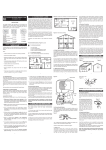
Sufficient smoke must enter the Smoke Alarm before it will
respond. The Smoke Alarm needs to be within 7.5 metres (25
ft) of the fire to respond quickly. It also needs to be in a
position where its alarm can be heard throughout your home,
so it can wake the occupants in time for all to escape. A single
Smoke Alarm will give some protection if it is properly
installed, but most homes will require two or more to ensure
that a reliable early warning is given. For maximum protection
you should put individual Smoke Alarms in all the rooms
where fire is most likely to break out, (apart from kitchens,
bathrooms & garages (see Locations to Avoid).
A Smoke Alarm should be located between the sleeping area
and the most likely sources of fire (living room or kitchen for
example), But it should not be more than 7.5 metres (25ft)
from the door to any room where a fire might start. Fit an
interconnected alarm within 3m (10ft) of all bedroom doors, so
the alarm will be heard.
Important: This Smoke Alarm is designed for a single
occupancy in a residential type environment.
HEAT ALARMS
The Heat Alarm gives a fire warning when the temperature at
the unit reaches 58° C. It is ideal for kitchens, garages, boiler
houses and other areas where there are normally high levels
of fumes, smoke or dust i.e. places where Smoke Alarms
cannot be installed without the risk of excessive nuisance
alarms. A Heat Alarm should only be used in a room
adjoining an escape route, in conjunction with Smoke Alarms
on the escape routes.
2