1
Some of what is now used for home
energy systems got its start in the
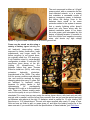
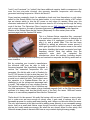
military. This is a close-up of the watersaving battery caps we used in the old
lead-acid “wet cells”. Since charging
batteries "gas off" some hydrogen and
oxygen when they're nearing full
charge, various caps have been
designed to catalytically recombine the
gases to water (HydroCaps, for
instance), or simply to condense
evaporating water (like these), in
systems that don't heavily overcharge.
This technology was originally used in
WWII submarines which surfaced to
quickly diesel-charge their batteries and generated lots of explosive gases in the process.
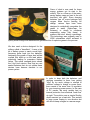
We also used a device designed for the
military called a "desulfator". It uses a tiny
bit of battery power to send a small highfrequency pulse back into the batteries,
hampering the growth of large lead sulfate
crystals that build up on the lead plates,
eventually leading to premature battery
failure. This rather cramped photo shows
the 2-by-2-inch device. Now that we use
sealed batteries that do not sulfate these
devices have become obsolete in our
power system.
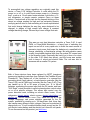
In order to keep both the batteries, and
anything connected to them, from getting
“fried” by too much voltage or starved or
sufficient voltage to charge or power them,
there needs to be some form of regulation
for your incoming power source. In the case
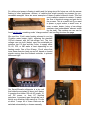
of PV panels, the early models had no
internal protection from electrical “back-flow”
at night. The solution was a simple Shottky
diode mounted on a heat-sink. This worked
to keep power flowing in one direction but
still did not keep voltages in a narrow range.