1
 Related Information:
l
Organizing Data Storage for Availability and Performance
l
Comparing RAID Level and Concatenation Performance
l
Controller-supported RAID Levels
l
Number of Physical Disks per Virtual Disk
l
Maximum Number of Virtual Disks per Controller
RAID Level 1 (Mirroring)
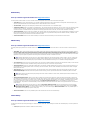
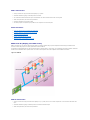
RAID 1 is the simplest form of maintaining redundant data. In RAID 1, data is mirrored or duplicated on one or more physical disks. If a physical disk on one
side of the mirror fails, then the data can be rebuilt using the physical disk on the other side of the mirror.
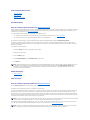
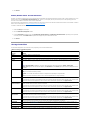
Figure 3-3. Mirroring Disks
RAID 1 Characteristics:
l
Groups n + n disks as one virtual disk with the capacity of n disks. The controllers currently supported by Storage Management allow the selection of
two disks when creating a RAID 1. Because these disks are mirrored, the total storage capacity is equal to one disk.
l
Data is replicated on the two disks.
l
When a disk fails, the virtual disk still works. The data is read from the failed disk's mirror.
l
Better read performance, but slightly slower write performance.
l
Redundancy for protection of data.
l
RAID 1 is more expensive in terms of disk space since twice the number of disks are used than required to store the data without redundancy.
Related Information:
l
Organizing Data Storage for Availability and Performance
l
Comparing RAID Level and Concatenation Performance
l
Controller-supported RAID Levels
l
Number of Physical Disks per Virtual Disk
l
Maximum Number of Virtual Disks per Controller
RAID Level 5 (Striping with distributed parity)
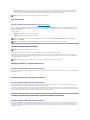
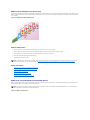
RAID 5 provides data redundancy by using data striping in combination with parity information. Rather than dedicating a physical disk to parity, however, the
parity information is striped across all physical disks in the disk group.
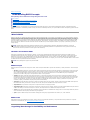
Figure 3-4. Striping Disks with Distributed Parity