1
Bulletin 74.1:ACE95
Introduction
• Control Pressure Gauge—Low-pressure gauge to
measure control pressure (tank pressure).
Tank blanketing is the process of using a gas, such
as nitrogen, to maintain a slightly positive pressure in
an enclosed storage tank. Tank blanketing prevents a
stored product from vaporizing into the atmosphere,
reduces product combustibility and prevents oxidation
or contamination of the product by reducing its
exposure to air. Tank blanketing is utilized with various
products, including: adhesives, pharmaceuticals,
pesticides, fertilizers, fuels, inks, photographic
chemicals and food additives.
• Purge Meter (Rotameter)—Maintains a small
amount of flow through the sensing and/or main
line. Prevents corrosive tank vapors from damaging
upstream equipment.
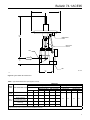
Types ACE95 and ACE95Sr valves are selfcontained, fully balanced, pilot-operated and are
used for accurate pressure control on tank blanketing
systems. These valves help control emissions
and provide protection against atmospheric
contamination. Types ACE95 and ACE95Sr valves
maintain a positive tank pressure which reduces
the possibility of tank wall collapse during pump out
operations, prevents stored product from vaporizing
to atmosphere. The Type ACE95Sr uses an angled
body in either a 2 NPT, CL150 RF or CL300 RF and
is taller than the Type ACE95.
Features and Benefits
• Pilot Controlled—ACE95 Series valves are pilot
operated which results in a high degree of accuracy
and control.
• Fully Balanced Pilot—Eliminates setpoint changes
caused by variations in inlet pressure.
• Large Actuator—Large actuator diaphragm
increases sensitivity to tank pressure changes.
• Rolling Pilot Diaphragm—The rolling diaphragm
balances the pilot valve and eliminates friction,
resulting in extremely accurate control.
• Diagnostic Port—Allows field analysis of valve
operation, simplifying maintenance and reducing
service costs.
Options and Accessories
• Pressure Switch—Allows installation of an alarm
system to indicate low or high-pressure on the tank.
• Outlet Check Valve—Prevents corrosive gases
and vapors from flowing back into the blanketing
system through the delivery line.
• Diagnostic Gauge—Allows analysis of valve
operation in the field, simplifying service and reliability.
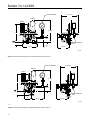
• Single Array Manifold (SAM)—Provides sense line
connection and main valve connection through a
single tank nozzle. (Not compatible with In-Line
end connection).
Principle of Operation
Types ACE95 and ACE95Sr tank blanketing valves
control the vapor space pressure over a stored liquid.
When liquid is pumped out of the tank or vapors in the
tank condense, the pressure in the tank decreases.
Tank pressure is sensed by the large actuator
diaphragm. When tank pressure is less than the
valve set pressure, spring force moves the actuator
diaphragm downward.
When the actuator moves downward, it pushes open
the pilot valve which allows loading pressure to flow
into the tank. As loading pressure decreases, inlet
pressure is able to overcome the force of the main
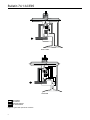
valve spring, opening the main valve. See Figure 3.
When pressure in the tank increases above setpoint,
the large actuator diaphragm is pushed upward,
allowing the pilot to close. Loading pressure equalizes
with inlet pressure closing the main valve.
The pilot valve is balanced (inlet pressure creates
equal upward and downward force on these
components); therefore, the outlet pressure of the unit
is not affected by fluctuating inlet pressure.
• Inlet Pressure Gauge—Displays pressure of
blanketing gas supply to the tank blanketing valve.
3