1
6 Lamp service life, aging and failure behavior
6.1 Lamp service life and aging behavior
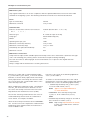
All lamp-specific electrical and photometric data are
ascertained after operating for 100 hours under laboratory conditions using reference ballasts (according to
IEC). The service life data are determined under controlled laboratory conditions with a switching rhythm of
11 h on/1 h off. In practice, noticeable deviations can
occur due to deviating supply voltage, ambient temperature and other general conditions. For metal halide
lamps, there can be individual differences in colour
from lamp to lamp, caused by external influences such
as supply voltage, control gear, burning position and
luminaire design.
Unless stated otherwise, the specifications apply to
TS types for horizontal burning position and to T and
E types up to 250 W for base up burning position. For
lamps > 400 W, the horizontal burning position applies
for the T-lamp. For lamps with 400 W, the burning position depends on the type (as stated in the catalogue).
Should deviating burning positions be used in practice, this could cause changes in luminous flux, colour
temperature and service life. The POWERBALL HCI®
with its round arc tube is less critical than conventional
cylindrical ceramic tubes.
The luminous flux is generally independent of the ambient temperature itself outside the luminaire. However,
too high ambient temperatures can cause increased
arc tube blackening in the long run. Also, special ignition units are required for lower ambient temperatures
down to approx. – 50 C°. HQI®-2000 W lamps with integrated auxiliary discharge are only permitted to – 20 °C.
For measurement of the electrical, photometrical and
colour characteristics, HQI®-TS and HCI®-TS lamps
shall be operated within a luminaire simulator. Details
on luminaire simulator (Quartz tubes around the lamp)
for determining the lamp data for HQI®-TS and HCI®TS can be found in IEC 61167, Annex B.2.
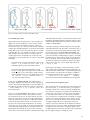
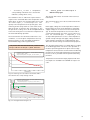
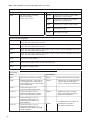
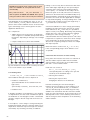
The mean service life stated in the documents (B50 value) is the burning time within which maximum half of the
lamps can have failed, i.e. the survival rate at this point
in time is at least 50%. This is a value normally indicated
by all lamp manufacturers. Apart from the B50 value,
it is also common practice to indicate the times e.g. at
which 10% or 3% of the lamps failed (B10 or B3).
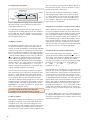
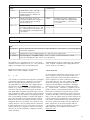
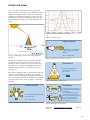
Mean service life (B50):
max. half the lamps have failed.
Economic life:
on account of the decrease in luminous flux and
the increasing failure rate, the illumination level of
the installation has fallen below a required value.
26
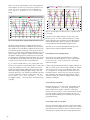
The economic life is obtained by including the decrease in luminous flux over the service life in the
calculation. Multiplying the survival rate by the maintenance of the luminous flux provides the decline in
luminous flux of the installation. These factors are
considered when preparing a maintenance schedule
according to EN12464 (see also 7.5 Maintenance of
lighting systems with metal halide lamps).
Data on lamp survival behavior and luminous flux behavior can be found in the corresponding Technical
Information.
One main reason for the reduction in luminous flux is
blackening of the arc tube by electrode material which
has settled on the tube wall throughout the service life.
Frequent switching, overload operation, use in confined luminaires or high ambient temperatures can add
to this blackening process and thus clearly reduce the
service life. Operation at reduced wattage also causes
increased tube blackening, as explained in chapter 5
“Reducing the wattage of high-intensity discharge
lamps”.
6.2 Storage of metal halide lamps
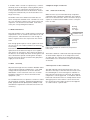
Incorrectly stored lamps (e.g. damp and warm) may
suffer corrosion on the contacts after a while; this oxidation must be completely removed before the lamps
are used. In unfavourable conditions, this may even
result in ignition problems. Lamps with filler material
may lose this filler material if stored incorrectly and the
socket contacts may then become exposed. There is a
risk of arc-overs during the ignition process or the risk
of touching live parts.
6.3 Failure mechanisms of metal halide lamps
The following failure mechanisms are possible for
metal halide lamps and the probability increases as the
lamp gets older.
• Leaking arc tube
• Increase in re-ignition peak, finally the lamp goes out
• Broken leads
• Leaking outer bulb
• Ignition failure
• Breakage or wear of the electrodes in the
arc tube
• Scaling of the base contacts by arcing in
the socket
• Bursting of the lamp