1
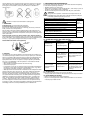
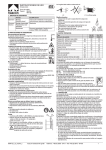
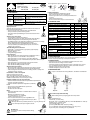
Hard-solder the most convenient end of the rope and lock it to the rope
drum with an Allen key (WAF 4 to 6 Nm; WAF 5 to 9 Nm) (fig. 1). When
turning the crank clockwise, the rope must wind on to the drum as
shown in fig. 2.
fig. 1
fig. 2
Check for function each time before starting work.
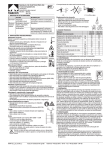
7. Operation
To lift the load: turn the hand crank clockwise.
To lower the load: turn the crank anticlockwise.
If the crank is released during lifting or lowering, the load (≤ minimum
load!) is held in its current position.
Do not wind up the rope under load beyond the point where the rims
project at least 1.5 times the rope diameter above the coiled rope. This
avoids overloading the winch and prevents the rope from coming off the
drum at the side.
At least 3 winds of the rope must remain on the drum at all times.
The rope pulling force of the first layer is the same as the nominal pulling
force of the winch. The pulling force decreases for each additional layer
of rope (--> type plate, pulling force for first/last layer of rope).
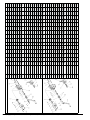
Variant with removable crank (optional)
8. Testing
The equipment must be inspected in accordance with the conditions of
use and the operating conditions at least once per year by an authorised
person 2 per TRBS 1203 (Technical expert) (testing per BetrSichV, §10,
sect.2 represents implementation of EC Directives 89/391/EEC and
95/63/EC and the annual occupational safety inspection per BGV D8,
§23, sect. 2 and BGG956). These inspections must be documented:
–– Before commissioning.
–– After significant alterations before recommissioning.
–– At least once per year.
–– In the event of unusual occurrences arising that could have detrimental effects on the safety of the winch (extraordinary tests, e.g. after a
long period of inactivity, accidents, natural events).
–– After repair works that could have an influence on the safety of the winch.
Technical experts (AP2) are persons, who have sufficient knowledge
based on their specialist training and experience, in the areas of
winches, lift and pull systems, and familiarity with the relevant official
occupational health and safety rules, accident prevention regulations,
guidelines and generally accepted engineering rules (e.g. EN standards), to evaluate the operational safety of winches, and lift and pull
systems. Technical experts (AP2) are to be nominated by the operator of the equipment. Performance of the annual occupational safety
inspection as well as the training required to obtain the aforementioned
knowledge and skills can be provided by haacon hebetechnik.
094148_m_gb_hseilw_s
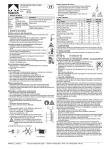
9. Maintenance recommendation
The operator determines the intervals themselves based on frequency
of use and the operating conditions.
–– Regular cleaning, no steam jets!
–– Carry out visual check on inaccessible brakes / locks every 5 years at
the latest, replace brake pads as required.
–– General overhaul by the manufacturer after 10 years at the latest.
CAUTION!
Only perform inspection, maintenance and repair work on an
unloaded hoist. Only allow work on brakes and locks to be performed by qualified specialist personnel.
Maintenance and inspection work
Visual check of the rope hooks (load carrier)
Function of the winch
Condition of the rope and lifting equipment
Brake function under load
Check rope for wear acc. to DIN ISO 4309 and service
Check fastening bolts for secure seating
Check all parts of the winch and crank for wear, if applicable, replace defective parts.
Check type plate for legibility
Have an inspection performed by an expert
Intervals
Before
every use
Quarterly
Annually
Annually
Lubricant recommendations: Multi-purpose grease per DIN 51502 K3K-20
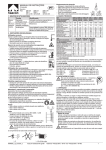
10. Operating faults and their causes
Fault
Cause
Remedy
It is difficult to crank No lubricant in the
Perform maintenance
the winch in an
bearing points
work.
unloaded state
Drum bearing dirty
Load is not held
Brake does open,
load can only be
lowered by exercising force
Winch was braced
during installation
Check fastening
Rope incorrectly
wound, direction of
rotation wrong for
lifting, brake worn
or defective
Apply the rope correctly.
Check the brake components and replace worn
components
Inadequate load
Load > 30 / 50 kg
Brake discs or
braking mechanism
under tension!
Release the brake by
gently striking the crank
arm with the palm of your
hand in the direction of
lowering
11. SPARE PARTS
When ordering spare parts it is e s s e n t i a l to quote:
–– The type and serial number of the equipment / item and part number
12. Disassembly, disposal
–– Make sure to observe the safety instructions.
–– Dispose of the equipment and the substances within it in an environmentally responsible manner.
haacon hebetechnik gmbh – Telephone +49 (0) 9375 - 84-0 – Fax +49 (0) 9375 - 8466
2