1
Figure 2. The parameter window of Chirp Radar
The range of the radar can arbitrarily be set.
The resolution of the chirpradar is proportional to the
difference of both edge frequencies. But the edge
frequencies should not exceed the bandwidth of the
SSB-transmitter and receiver. Therefore, the default of
500 Hz and 2500 Hz usually is a good choice.
The relaxation factor controls the time constant of the
order-1-IIR-filter of the display. The integration time is
about 0.1 / (relaxation factor). A value 0.1
guarantees a fast display of changes. A value 0.001 averages the echoes over about one minute. So
noise is well suppressed.
Both radar types need an identical time basis at the sound output and the sound input. I.e. the
samplerates (in the case of chirp radar 48000) must exactly be the same. If these samplerates differ
even slightly, then the echos move slowly along the distance scale. This surely will happen, if
different soundcards are used for output and input. This effect can be compensated by an appropiate
value of the in/out-ratio parameter. If for example the output samplerate is larger than the input
samplerate the in/out-ratio 1.003, then the output signal is resampled by the nominal samplerate
divided by 1.003. If this incorrect signal is sent by the incorrect sound output, the sound input sees
it as a correct signal. Samplerate errors of soundcards usually are very large (0.99 ... 1.01).
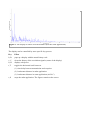
Figure 3. The display of echoes over the distance. In this case the sonar application with speaker
and microphone as the transmitter and receiver. The distances then are scaled by the ratio of (speed
of sound) / (speed of light). The figure shows the author's office. Everything beyond 6m is from
multiple reflections.