1
1.
Introduction
The S7A Version 7.40 with build no 105 offers a new function which allows you to receive a
num ber of up to 4096 digital signals with tim estam p from the PLC and to forward these signals to
the clients (iFIX and/or OPC).
By the "regular" polling of the PLC data area the tim estam p will be generated by the SCADA
System (within the S7A driver). Due to com m unication delays between the PLC and the driver
such a tim estam p do not represent the real tim e (the tim e the signal actually occured) of the
signal.
W ith the new S7A option "Digital Signals" it is now possible to generate the tim estam p in the PLC
at the tim e as the signal state change occurs and to transfer this tim e stam p together with the
related signal state to the SCADA system .
Furtherm ore the signals and their tim e stam p will be buffered within a FIFO buffer of the PLC and
asynchronously transferred to the S7A driver. This buffering ensures that no signal changes will be
lost (assum ed that the size of the FIFO buffer is sufficient) in case of short signal changes and/or
low com m unication speed between PLC and S7A driver.
The signal transfer to the S7A driver occurs by a dynam ically length transfer data block. The S7A
driver periodically polls a single handshake byte of this data block. The handshake byte will be set
by the PLC when new signal changes occurred and buffered in the FIFO. Afterwards the S7A
driver just reads the am ount of data bytes which are needed to transfer these signal changes
including their tim estam ps.
Due to this transfer m ethod the com m unication traffic between PLC and S7A driver is reduced to a
m inim um and even a large num ber of signals can be transferred effectively by a quiet short
transfer data block.
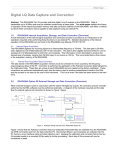
The following picture shows an overview about this new functionality of the driver.
figure 1. overview components
Intersystem transmission of digital signals with timestamp
between Siemens S7 PLC systems and S7A Driver / OPC-Server
Date: 31.03.2011- copyright InCoSol
Page 3