1
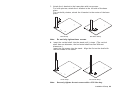
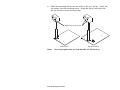
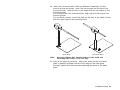
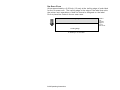
Bar Code Travel Speed Considerations A bar code should be present in the beam for at least five scans for most reliable operation. The verifier performs a minimum of 100 scans/analyses per second. At that rate, each analysis is accomplished in 10 milliseconds max. Therefore, a bar code must be in the beam for at least 50 milliseconds to be reliably analyzed. Parallel Bar Code Direction In parallel bar code (picket fence) travel direction, a bar code is in the laser beam throughout the height of the shortest bar in the code. An easy way to estimate the fastest speed the code can travel through the beam is to divide the height of the shortest bar in the code by the maximum time required for the verifier to take five scans of the code. Example: Calculate the maximum travel speed where the shortest bar height in a code is .5 inches and the verifier being used performs a minimum of 100 scans/analyses per second. Five scans requires 50 milliseconds (.05 seconds) to gather, so .5 inches (bar code height) divided by .05 seconds (time needed to gather 5 scans) = 10 inches/second. Therefore, the maximum speed the code can travel through the beam is 10 inches per second. Vertical distance between bar codes is also a speed consideration in parallel bar code direction. The verifier must have five continuous scans where no bar code is detected to reliably exit a bar code when operating in the standard operation mode. Assuming 100 scans per second minimum, this means the vertical distance between the codes must take at least 50 milliseconds to pass through the laser beam. Calculate the maximum speed by measuring the shortest vertical space between bar codes on a label (or between labels.) Divide this distance by .050 (seconds). The result is the fastest speed the codes can move through the beam. For more detailed information about the vertical distance between bars, refer to the SV Series Operator’s Guide. The slower of the two print speeds calculated above for bar height and gap height is the maximum recommended speed for parallel bar code travel direction. Parallel Bar Code Positioning Specifications Four codes across maximum Horizontal gap between codes: 0.5 inch (13 mm) minimum Maximum number of codes per label: 10 Installation & Setup 2-13