1
choice here was to build KNIT as an extension of the Python language. Python is a
programming language which is both extremely powerful and easy to learn and handle. An
almost infinite number of modules have been written for Python so that only a few lines of
codes are needed to send an email, perform a fast Fourier transform or produce a nice
postscript file for a figure. KNIT is merely another module of Python. We believe that this
programming paradigm (i.e. extending language capabilities as opposed to a standalone
program) is very powerful in term of saving human time: codes are more versatile, age
better and easily interact with other software.
Before going to the technical part of this documentation, we quickly show below a
few examples of what has already been done with the code. Readers interested in the
physics and the detailed of the modeling are referred to the corresponding scientific papers.
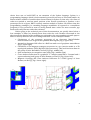
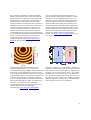
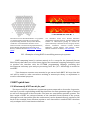
Here we merely illustrate the sort of things that KNIT can do. Examples include:
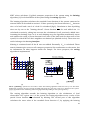
• Calculations of the transport properties of an electronic Mach-Zehnder
interferometer in a 2D gas in the Quantum Hall Regime (Fig.1, upper left)
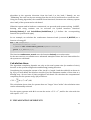
• Anomalous Quantum Hall effect in a Hall bar made out of graphene nanoribbons
(Fig.1, upper right)
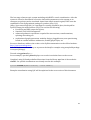
• Calculation of the magneto-transport properties in a p-n junction made in a 2D
topological insulator (CdTe/HgCdTe heterostructure). This work has been done in
the group of Carlo Beenakker, see Ref.[2] (Fig.1, middle left)
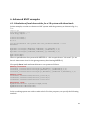
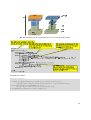
• Spin accumulation in a magnetic nano-pillar (Fig.1 middle right)
• Cross Andreev Reflection in a graphene “Y” sample connected to 2 normal and 1
superconducting lead (group of Arne Brataas, see Ref.[6], Fig.1 lower left).
• Magnetic focussing and Cross Andreev Reflection in a 2DEG (group of Arne
Brataas, see Ref.[7], Fig.1 lower right).
3