1
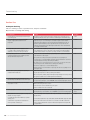
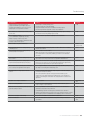
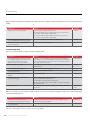
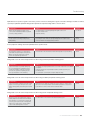
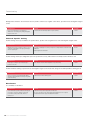
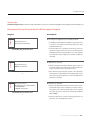
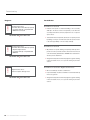
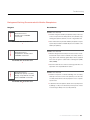
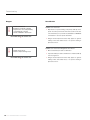
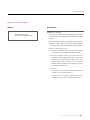
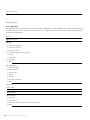
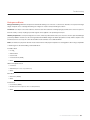
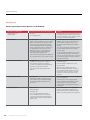
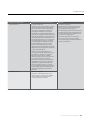
Troubleshooting Section One Inadequate Staining Little or no staining of controls or specimen tissue, except for counterstain. May show little or no background staining. Possible Cause Solution See Page Primary antibody or labeled reagent omitted. Reagent used in wrong order. Repeat the procedure using the manufacturer’s staining system specification sheet or standard operating procedure reagent checklist as established by the individual laboratory. 57-60 Excessively diluted or excessively concentrated reagents; inappropriate incubation time and temperature. Determine correct concentration for each reagent. Depending on the degree of staining obtained, if any, a 2- to 5- fold change in concentration may be needed. Incubation temperature and incubation time are inversely proportional and will affect results. To determine optimal incubation protocol, vary either the time or temperature for each reagent in the IHC staining system. Generally, incubation times can be extended if little or no background was detected. 7, 11-12 Primary antibody diluted with inappropriate buffer. Use of PBS or TBS as an antibody diluent. Lack of stabilizing or carrier protein. Detergent in diluent. Check formula and compatibility of antibody diluent. A change of ion content and/or pH of the antibody diluent can cause a diminution in the sensitivity of the antibody. Addition of NaCl should be avoided. This problem is primarily seen with monoclonal antibodies. 57-60 Primary antibody defective; one or several secondary or ancillary reagents defective. Do NOT use product after expiration date stamped on vial. Replace defective or expired antibody; repeat staining protocol, replacing one reagent at a time with fresh, in-date reagents. 7-8 Dissociation of primary antibody during washing or incubation with link antibodies Use of alcohol-based counterstain and/or alcoholbased mounting media with aqueous–based chromogens. Excessive counterstaining may compromise proper interpretation of results. Incorrect preparation of substrate-chromogen mixture. Store products according to each product specification sheet or package insert. If using a neat or concentrated antibody, and directed by the manufacturer to store frozen, it may be aliquoted to avoid repeated freezing and thawing. For freezing, use a -70 °C to -80 °C freezer or a non frost free -20 °C freezer. A frost free freezer will cycle on and off which will cause damage to the antibody¬. Do not freeze ready-to-use or customer diluted products. Follow manufacturer recommendations on product specification sheets, package inserts and reagent labels. A feature of low affinity antibodies: Polyclonal primary antiserum: Attempt staining at low dilutions. Monoclonal primary antibody: Replace with higher affinity antibody of identical specificity. Re-optimize incubation times for washing buffer and link antibody. Repeat staining, using water-based counterstain and mounting media. Use a permanent chromogen, such as DAB/DAB+, that is not affected by organic solvents. Use a counterstain that: Will not excessively stain tissue sections. Can be diluted so as not to obliterate the specific signal. Sodium azide in reagent diluent or buffer baths for immunoperoxidase methodologies. IHC Staining Methods, Fifth Edition 115-121 Reduce incubation time of the counterstain. Repeat substrate-chromogen treatment with correctly prepared reagent. Staining intensity is decreased when excess DAB/DAB+ is present in the working reagent. Specification Sheet Check compatibility of buffer ingredients with enzyme and substrate-chromogen reagents. 57-60 Repeat staining. Commercial phosphate buffers may contain additives that will inhibit alkaline phosphates activity. Avoid sodium azide in diluents and buffers. A concentration of 15mM/L sodium azide, which is routinely added to IHC reagents to inhibit bacterial growth, will not impair HRP conjugated labels. 138 | 16-17 Incompatible buffer used for preparation of enzyme and substrate-chromogen reagents: Use of PBS wash buffer with an alkaline phosphatase staining system. 5-6