1
Q That eliminated the worst noise, but I still hear a number of other noises from time to time. Where else can I look?
A You may have two or more noisy devices in your house. You may also hear noise sources at your neighbors’ houses. Pay
attention to activity in your neighborhood. For example, does the noise appear when your neighbors are outside, perhaps using their
electric bug “zapper”? Maybe you hear noise when another neighbor uses an old fluorescent light in the basement. If you see no
suspects, try some direction finding (DFing) and investigation.
Q I don’t know anything about DFing; don’t I need special equipment?
A DFing is a specialty, but its application to electrical noise is fairly simple. You can begin DFing by walking around with a portable
AM/SW/VHF AM receiver! (You need an AM receiver because most FM receivers reject electrical noise.) Fortunately, most portable
VHF scanners and some ham H-Ts tune the aircraft bands, which use AM instead of FM.
You will need to do a bit of walking or driving. Some electrical noise can propagate for miles! When the power lines radiate
noise, standing waves can form on the power-line “antenna.” The resulting amplitude peaks and valleys may occur far from the
source.
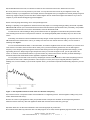
Fortunately, most electrical noise is broadband and usually stronger at lower frequencies. Although you may hear noise on an
AM-broadcast receiver miles from the source, you usually won’t hear it on VHF until the source is nearby. You can use this to
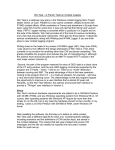
advantage. See Figure 1.
You can use the AM broadcast band, or 160 or 80 meters, to locate the neighborhood of the noise. Because you can hear some
of the noises on 10 meters, those sources must be nearby. Once you have located the general area, tune the radio higher in
frequency. Find a frequency where the signal is weak, and start moving around. As long as the signal becomes stronger, you are
approaching the source. Keep tuning to higher frequencies. When you can hear the signal on VHF, you are quite close to the
source. To continue, use a directional antenna, or get the receiver very close to each house in the area. (An article describing a
directional antenna and aircraft-band receiver appeared in September 1992 QST.) [1]
You can pinpoint a house with a VHF receiver by collapsing the receiver’s whip antenna to a few inches and placing it near the
power meter of each house—with the permission of the occupant, of course. (This may be marginally effective in apartment
buildings, too, but not as reliable.) If you do locate a specific house, you will need to repeat the troubleshooting steps from your own
home.
Figure 1—The amplitude of electrical noise varies as a function of frequency.
Q I found two sources—an aquarium heater and a food blender—in neighboring houses. The first neighbor is willing to buy a new
heater. What kind should he buy?
A There are no lists of quiet appliances. Take your portable receiver to the pet store and listen to several operating heaters to
determine which is least noisy. Most new appliances radiate less noise than those made many years ago.
Q Thanks. What can I do about the food blender? The service shop people say it works fine.
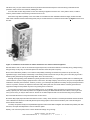
A An external ac-line filter may reduce the noise. The filter plugs into an ac outlet, and the appliance plugs into the filter. The blender
June QST: Lab Notes - June 1996 - Page 2
ARRL 1996 QST/QEX/NCJ CD C
i ht (C) 1997 b Th A
i
R di R l
L
I