1
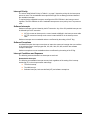
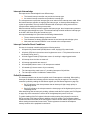
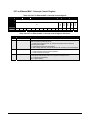
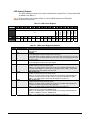
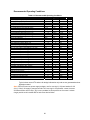
Random Number Generator Register
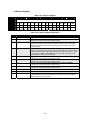
The Random Number Generator register provides a random number for use in the TCPIP or
MAC as an address. The random-number generator is a counter running at the current CPU
clock frequency and continuously updates on each clock. The data read is a 16-bit data field.
Writes to this register are to bits [1] and [0].
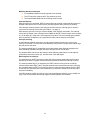
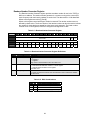
Writes to this register control which type number is returned. The random numbers are not
affected by these writes. The linear version of the random number can also be used to indicate
the number of clocks that have passed for timing some code execution. The linear number
consists of two 16-bit registers, with RS=1 being the most-significant 16 bits.
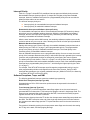
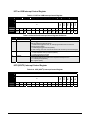
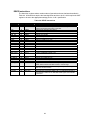
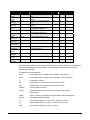
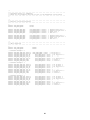
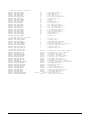
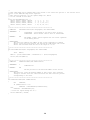
Table 3-13. Random Number Generator Register
BIT
OFFSET
15
14
13
12
11
10
8
7
6
5
4
3
2
1
0
RS
LI
0
R
W
0
R
W
6Ah
FIELD
RESET
RW
9
Don’t Care
0
R
0
R
0
R
0
R
0
R
0
R
0
R
DATA[15:0]
0
0
R
R
0
R
0
R
0
R
0
R
0
R
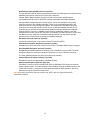
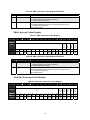
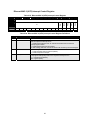
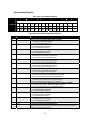
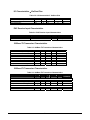
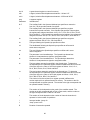
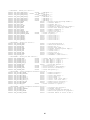
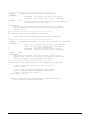
Table 3-14. Random Number Generator Register Definitions
Bits
Field Name
15:2
1
///
RS
0
LI
15:0
DATA[15:0]
Description
Don’t Care
Register Select
0 = register 0.
1 = register 1.
Only used in Linear Number mode. See Table 3-15.
Linear
0 = selects Pseudo Random number in a 16-bit register.
1 = selects Linear numbers in a 32-register.
See Table 3-15.
Random Number Generator Data
A counter running at the current CPU clock frequency that continuously updates
on each clock.
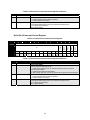
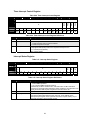
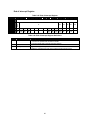
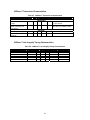
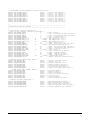
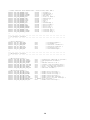
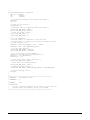
Table 3-15. RS/LI Combinations
RS
LI
0
0
1
1
0
1
0
1
Description
Pseudo Random Number (16 bits)
Linear Clock Counter (lower 16 bits)
Reserved
Linear Clock Counter (Upper 16 bits)
38