1
About these instructions for use
When the symbol shown on the left is placed before a piece of text, this means that an important instruction follows.
!
When the symbol shown on the left is placed before a piece of text, this means that an important warning follows pointing out a risk of injury to the user or damage to the device.
1.
About the sediment sampler and the instructions
The instructions have a strong visual orientation. This makes it possible to start work with the sediment core
sampler quickly. The first section consists of instructions that apply to both sets (04.23.SA basic and 04.23.SB
extended set). This is followed by the extra possibilities offered by the extended set (04.23.SB). The sets are
intended for a maximum sampling depth of 5 metres. This depth can be increased by adding extension rods.
Taking samples in flowing water becomes difficult or even impossible at a depth of just a few metres. However,
the bed will be extremely stony in fast flowing water. The sampler is not intended for this. The piston that moves
the sample into the tube and the possibility of hammering mean that in a sandy or other firm bed, a sample of 50150 cm can easily be taken. Bear in mind that driving in the sampler involves a substantial thrust. This means that
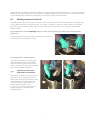
withdrawal can be difficult or risky, especially from a small boat (danger of capsizing). Fixing the boat in place in
relation to the bed using two anchors or spuds is necessary at all times to prevent twisting of the sediment cutter.
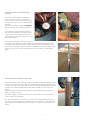
First read through these instructions completely. Then take the materials and set to work, following the
instructions step by step.
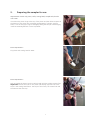
Each illustration with explanations starts by stating in italics what equipment you need,
including any additional items.
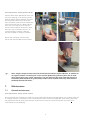
A few days before going to the work location, charge the batteries of the pumps. If you have
not used the appliance for some time, inflate the membrane in the cutting head once to check
that this is still working properly. It is always easier to repair leaks at home than in the field.
For such cases, see the chapter on “Maintenance”.
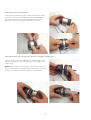
Take adequate safety precautions, especially when working on a boat.
Choose a stable boat with enough space, or work from a platform mounted on two boats
connected together alongside each other. Constantly balancing in an unsteady boat is
extremely tiring!
If you have any comments or observations about the equipment or about these instructions,
please do not hesitate to let us know! We wish you every success in your work.
2