1
Control Cards
Starting Out
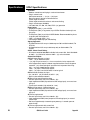
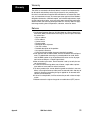
• Solid-state contactor, ac input, CA
• Solid-state contactor, dc input, CD
• Burst firing (zero cross) fixed time base, BF
• Burst firing (zero cross) variable time base, BV
• Phase angle control, AF *
• Phase angle control with current limiting, AL *
* Note: For 1Ø and 3Ø, 3-leg controls only; not for
3Ø, 3-leg controls.
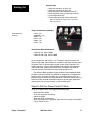
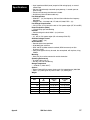
Plug-in transformers (50/60 Hz.)
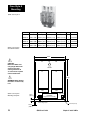
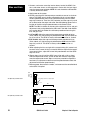
QPAC Modularity
Overview.
• 120VÅ (ac)
• 208/240VÅ (ac)
• 380VÅ (ac)
• 415VÅ (ac)
• 480VÅ (ac)
• 575VÅ (ac)
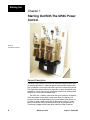
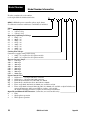
Power Bases With Motherboards
• QPAC-01: 1Ø, 150 to 1,000A
• QPAC-32: 3Ø, 2-leg, 150 to 1,000A
• QPAC-33: 3Ø, 3-leg, 150 to 1,000A
on any voltage from 120 to 575VÅ (ac). The plug-in Control Card sets the
QPAC’s firing mode. Control Cards are available in solid-state contactor, burst
firing (zero cross) or phase angle firing with a wide variety of options. This
modular approach, using a standard Power Base with plug-in transformers
and Control Cards, allows power control users, distributors and OEMs to
maintain minimum inventories while still providing rapid service.
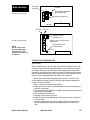
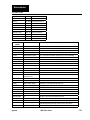
The different QPACs provide the types of power control needed for different power sources and loads. The QPAC-01 is designed for all single-phase
power sources and loads. The QPAC-32 is for three-phase zero cross applications such as resistance heating elements, balanced or unbalanced. The
QPAC-33 is best suited for balanced three-phase, phase angle applications
requiring soft start or current limiting, or with inductive loads.
Steps To Put Your Power Control To Work
To put your QPAC to work, we suggest the following steps:
• Read the User's Guide.
• Plan your installation and wiring.
• Mount the QPAC.
• Wire your QPAC to the system.
• Start the system and, if applicable, adjust the bias and gain on the QPAC.
• That's all there is to it!
Chapter
1: Starting Out
QPAC User's Guide
5