1
3.2
Writing Output
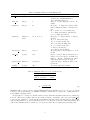
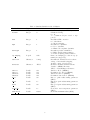
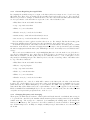
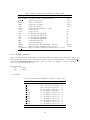
The namelist variables that control the frequency of the model diagnostics, netCDF history, and restart
files are shown in Table 1. By default, diagnostics are written out once every 48 timesteps to the ascii file
ice.log.$LID (see section 9.1). $LID is a time stamp that is set in the main script.
The namelist variable histfreq controls the output frequency of the netCDF history files; writing
monthly averages is the default. The content of the history files is described in section 9.3. The value
of hist avg determines if instantaneous or averaged variables are written at the frequency set by histfreq.
If histfreq is set to ’1’ for instantaneous output, hist avg is set to .false. within the source code to
avoid conflicts. The latest version of CICE allows for multiple history streams, currently set to a maximum
of 5. The namelist variables, histfreq and histfreq n are now arrays which allow for different frequency
history file sets. More detail on this is available in 9.3.
The namelist variable pointer file is set to the name of the pointer file containing the restart file name
that will be read when model execution begins. The pointer file resides in the scripts directory and is created
initially by the ice setup script but is overwritten every time a new restart file is created. It will contain
the name of the latest restart file. The default filename ice.restart file shown in Table 1 will not work unless
some modifications are made to the ice setup script and a file is created with this name and contains the
name of a valid restart file; this variable must be set in the namelist. More information on restart pointer
files can be found in section 9.2.
The variables dumpfreq and dumpfreq n control the output frequency of the netCDF restart files; writing
one restart file per year is the default and is set by the CESM driver. The default format for restart files is
now netCDF, but this can be changed to binary through the namelist variable, restart format.
If print points is .true., diagnostic data is printed out for two grid points, one near the north pole
and one near the Weddell Sea. The points are set via namelist variables latpnt and lonpnt. This option
can be helpful for debugging.
incond dir, restart dir and history dir are the directories where the initial condition file, the restart
files and the history files will be written, respectively. These values are set at the top of the setup script and
have been modified from the default values to meet the requirements of the CESM filenaming convention.
This allows each type of output file to be written to a separate directory. If the default values are used, all
of the output files will be written to the executable directory.
incond file, dump file and history file are the root filenames for the initial condition file, the restart
files and the history files, respectively. These strings have been determined by the requirements of the CESM
filenaming convention, so the default values are set by the CESM driver. See 9.2 and 9.3 for an explanation
of how the rest of the filename is created.
3.3
Model Physics
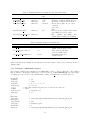
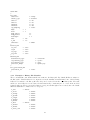
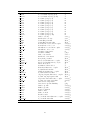
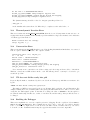
The namelist variables for the ice model physics are listed in Table 3. restart is almost always true since
most run types begin by reading in a binary restart file. See section 5 for a description of the run types and
about using restart files and internally generated model data as initial conditions. kcolumn is a flag that
will run the model as a single column if is set to 1. This option has not been thoroughly tested and is not
supported.
The calculation of the ice velocities is subcycled ndte times per timestep so that the elastic waves are
damped before the next timestep. The subcycling timestep is calculated as dte = dt/ndte and must be
sufficiently smaller than the damping timescale T, which needs to be sufficiently shorter than dt.
dte < T < dt
(2)
This relationship is discussed in Hunke (2001); also see Hunke and Lipscomb (2008), section 4.4. The
best ratio for [dte : T : dt] is [1 : 40 : 120]. Typical combinations of dt and ndte are (3600., 120), (7200.,
240) (10800., 120). The default ndte is 120 as set in ice init.F90.
kitd determines the scheme used to redistribute sea ice within the ice thickness distribution (ITD) as the
ice grows and melts. The linear remapping scheme is the default and approximates the thickness distribution
in each category as a linear function (Lipscomb (2001)). The delta function method represents g(h) in each
7