1
Waterco ChemfloPlus I pg 03
HOW IT WORKS:
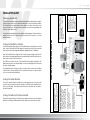
INITIAL POOL BALANCE
The ChemfloPlus continuously analyses pool water chemistry while your pool system is running.
The base model has two dosing pumps that dose liquid chlorine and acid to the pool water flow
in response to the water analysis from the probe.
Before you begin using the ChemfloPlus make sure your pool water is balanced as follows:
The ChemfloPlus can also be used to control a Salt Water Chlorinator (SWC) with and without
extra available dosing from the chlorine dosing pump. The chlorine dosing pump is always
available for manual dosing.
If it is a new installation, add enough chlorine (liquid or granular) to achieve a reading of 3ppm
on an appropriate test kit.
When both the SWC and the chlorine dosing pump are enabled the dosing pump is activated
at an ORP approximately 50mV below the set point. It will then will dose regularly until the ORP
climbs to a point that the SWC can take it the rest of the way. This results in the doser only
covering extra high chlorine demands.
Stabiliser
Note: the filter system should always be running when the pool is being used.
Oxidation Reduction Potential
The ChemfloPlus measures how much chlorine is in pool water by measuring the ORP of the
water.
ORP stands for Oxidation Reduction Potential. Chemicals like chlorine destroy pathogens (eg
harmful bacteria) in water by oxidising them.
The level of oxidation available in the water can be measured chemically with an ORP sensor
contained in the ChemfloPlus’s multielectrode (probe). This produces a voltage related to the
ORP of the water, which is a measure of the effectiveness of chlorine in the water.
Varying the ORP will affect how long it takes to destroy harmful bacteria in pool water. For
example, if ORP is maintained at 650mV, E.coli type bacteria will be destroyed in around one
second. However, if the ORP is lowered to 550mV, the same organisms may take up to 2 hours
to be eliminated.
pH Control
When chlorine is added to water the pH always changes – this is because chlorine is not a
neutral chemical. The pH will slowly rise as chlorine is added to the water. A rise in pH greatly
reduces the effectiveness of the chlorine as a sanitiser, so it is important to ensure that the pH
remains in the correct range.
The pH of the water can be lowered by the addition of acid – and your ChemfloPlus does this
automatically. The ChemfloPlus multielectrode (probe) measures the pH of the water and doses
the pool with small amounts of acid to keep the pH in the correct range.
Chlorine
If the pool is outdoors, it is vital that stabiliser (also known as cyanurate and cyanuric acid) be
added and maintained at 40ppm to 60ppm. This compound reduces chlorine destruction due
to sunlight. However, too much stabiliser will reduce the effectiveness of chlorine and can
result in poor quality water so ensure stabiliser does not exceed 80ppm.
Good stabiliser level keeps good chlorine levels and reduces maintenance.
pH
For chlorine to be effective, the pH must be within a certain range. This is usually between 6.8
(fibreglass/liner pools) or 7.2 (concrete/plaster) and 7.8.
Adjust pH down with acid – powder, liquid sulphuric or liquid hydrochloric. Be very careful with
acid as it can be harmful and corrosive.
Total Alkalinity (TA)
Total alkalinity is also known as carbonate hardness or TA for short. The recommended level is
between 80 and 120ppm.
TA is related to pH in that it stops the pH from varying quickly with small additions of acidic or
alkaline chemicals. When the TA is low it is almost impossible to control the pH.
To raise the TA, buffer (sodium bicarbonate) is added. This must be done slowly as buffer will
also cause the pH to rise. As an approximate rule every increase of 20ppm of TA will also cause
a 0.1 rise in pH. Once buffer is added it should be left to mix in the pool for a few hours before
reducing the pH.
Phosphates and Nitrates
Phosphate and ammonia nitrogen will make your garden green – and they will do the same
thing to your pool. Check for phosphates and add phosphate remover if necessary. Don’t let
fertiliser get into your pool! Phosphates are also in some cleaning products – check the label if
using around your pool.
When Controlling a Salt Water Chlorinator
Follow the directions for the initial balance for your SWC unit – the difference is likely to only be
the addition of salt or minerals. Note that the ChemfloPlus unit will turn the power to the SWC
unit on and off – the SWC unit must be capable of functioning in this manner and should be set
to manual operation only (not automatic).