1
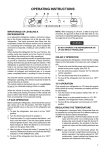
The thermostat can be adjusted between “MAX” and
“OFF” to obtain the desired cabinet temperature.
The closer the knob is to “MAX” - the colder the cabinet
temperature. The closer the knob is to “OFF” - the warmer
the cabinet temperature.
When the thermostat reaches the set temperature, it will
cut the burner back to bypass or, in electric operation,
(230-240 V AC) shut off the heating element.
The setting of the thermostat is not critical, but we recommend it be adjust to maintain a dry frost on the cooling fins. Adjust the thermostat knob closer to “MAX” when
the outside temperature becomes warm.
HOW TO USE THE REFRIGERATOR
FOOD STORAGE COMPARTMENT
The food storage compartment is completely closed and
unventilated, which is necessary to maintain the required
low temperature for food storage. Consequently, foods
having a strong odor or those that absorb odors easily
should be covered. Vegetables, salads etc. should be
covered to retain their crispness. The coldest positions
in the refrigerator are under the cooling fins and at the
bottom of the refrigerator. The warmer areas are on the
upper door shelves. This should be considered when
placing different types of food in the refrigerator.
FROZEN FOOD STORAGE
COMPARTMENT
Quick frozen soft fruits and ice cream should be placed
in the coldest part of the compartment, which is at the
bottom of the aluminum liner. Frozen vegetables, may
be stored in any part of the compartment.
This compartment is not designed for deep or quick freezing of food. Meat or fish, whether raw or prepared, can
be stored in the frozen food storage compartment provided they are precooled first in the refrigerator. They
can be stored about three times longer in the frozen food
compartment as compared to the fresh food compartment. To prevent food from drying out, keep it in covered dishes, containers, plastic bags or wrapped in aluminium foil.
Ice cubes can be made in the freezer compartment.
For faster ice making, the trays should be placed in direct contact with the bottom of the freezer compartment.
Ice making is accelerated if the thermostat knob B is
turned to the “MAX” setting.
It is a good idea to do this a few hours before the anticipated need for ice, but be sure to turn the thermostat
back to the normal setting when the ice is formed.
Food in the lower compartment may be frozen if the thermostat is left on “MAX”.
DEFROSTING
Shut off the refrigerator by turning the knob A to “OFF”
position. Empty the refrigerator, leaving the drip tray under the finned evaporator, and the cabinet and freezer
doors open. Defrosting time can be reduced by filling
the ice trays with hot water and placing them in the freezer
compartment.
8
NOTE: Defrost water runs from the drip tray to a receptacle at the rear of the refrigerator where it normally
evaporates. (See FIG. 1).
With a lot of defrost water as a result of heavy frosts
build up on the cooling fins, move the plastic drain tube
into a water tight bucket or container, (access through
louvered service panel on the outside of the vehicle).
When all frost has melted, wipe up the excess moisture
and empty the accumulated water from the bucket. Replace the drain tube to its original position.
Dry the interior of the refrigerator with a clean cloth.
Replace all food and set the thermostat to “MAX” for a
few hours, then reset the thermostat to its normal position.
! CAUTION
DO NOT use a hot air blower. Permanent damage
could result from warping the metal or plastic parts.
DO NOT use a knife or an ice pick, or other sharp
tools to remove frost from the freezer compartment.
They can create a leak in the ammonia system.
CLEANING THE REFRIGERATOR
Cleaning the refrigerator is usually done after it is defrosted or put into storage. To clean the interior liner of
the refrigerator, use lukewarm weak soda solution. Use
only warm water to clean the finned evaporator, gasket,
ice tray and shelves.
NEVER use strong chemicals or abrasives to clean
these parts, as the protective surfaces will be damaged. It is important to always keep the refrigerator
clean.
SHUT- OFF (STORAGE PROCEDURE)
To shut off the refrigerator, turn the knob A to “OFF”
position. If the refrigerator will not be in operation for a
period of weeks, it should be emptied, defrosted, cleaned
and the doors left ajar. The ice trays should also be dried
and kept outside the cabinet.
! WARNING
DO NOT store explosive substances in the refrigerator, such as cigarette lighter gas, gasoline, ether
or the like.
NOTE: Sodium chromate is used for corrosion protection (less than 2 weight % of the coolant).