1
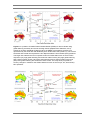
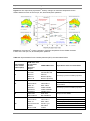
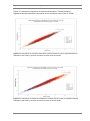
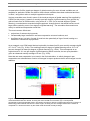
Consistent Climate Scenarios User Guide - Version 2.2 About this document The intent of this User Guide is to provide users (previously restricted to project teams under the CCRP program (see Appendix), but now extended to all users) with background input and guidelines for using the Consistent Climate Scenarios (CCS) projections data. The User Guide aims to assist users in interpreting the data that has been provided. This updated User Guide (V2.2) which supersedes the previous draft (V2.1) released in August 2012, includes additional information about: the availability of CCS datasets through the Long Paddock Climate Change Projections web portal updated CF and QM file-naming conventions additional projections data for four Representative Future Climate partitions (RFCs) maps showing projected 21st Century temperature changes for the four RFCs This User Guide was supported by the project’s Chair and Expert Panel. In addition, User feedback has also played an important role in the development and improvement of the information that this User Guide contains. Referencing Consistent Climate Scenarios (CCS) Data The data source should be acknowledged as the Queensland Government SILO database (http://www.longpaddock.qld.gov.au/silo). The SILO database is operated by DSITI. The climate ‘change factors’ used to calculate CCS data have been estimated using: Coupled Model Intercomparison Research Program 3 (CMIP3) patterns of change data (projected changes per degree of 21st Century global warming) supplied by the CSIRO and the UK Met Office/Hadley Centre; and data from AR4 SRES scenario temperature response curves (projected amounts of global warming) supplied by the CSIRO. As such, the following data sources should also be acknowledged: The CMIP3 global model database (http://www-pcmdi.llnl.gov/ipcc/about_ipcc.php) OzClim http://www.csiro.au/ozclim) UK Met Office/Hadley Centre (http://www.metoffice.gov.uk/climate-change/resources/hadley) Related publications Further information, describing the infilling of trends per degree of global warming for missing climate variables, is documented in: Ricketts, J.Ha., Kokic, P.Nb. and Carter, J.Oa. (2011). Estimating trends in monthly maximum and minimum temperatures in GCMs for which these data are not archived. aQueensland Climate Change Centre of Excellence, Queensland Government. bCSIRO, Mathematics, Informatics and Statistics. 19th International Congress on Modelling and Simulation (MODSIM), Perth, Australia 12-16 December 2011, http://www.mssanz.org.au/modsim2011/F5/ricketts.pdf. Further information, describing the ‘quantile-matching’ approach, is documented in: Kokic, P., Jin, H. and Crimp, S. (2012). Statistical Forecasts of Observational Climate Data. Extended Abstract, International conference on “Opportunities and Challenges in Monsoon Prediction in a Changing Climate” (OCHAMP-2012), Pune, India 21-25 February 2012. Additional information, summarising the Consistent Climate Scenarios Project, is documented in: Ricketts, J.Ha., Kokic, P.Nb. and Carter, J.Oa. (2013). Consistent Climate Scenarios: projecting representative future daily climate from global climate models based on historical data. aDepartment of Science, Information Technology, Innovation and the Arts. Queensland Government. bCSIRO, Mathematics, Informatics and Statistics, Australia. 20th International Congress on Modelling and Simulation (MODSIM), Adelaide, Australia, 1–6 December 2013, http://www.mssanz.org.au/modsim2013/L11/ricketts.pdf. i