1
1
Documentation
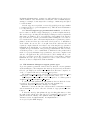
There are several articles that relate to the gidl framework. The most relevant
one is “Parametric Polymorphism for Software Component Architectures”, by
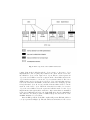
Oancea and Watt [6], that introduces the semantics of the generic model proposed by gidl, presents the high-level architecture of the gidl base application
and outlines the main ideas employed in generating the C++, Java and Aldor
language bindings.
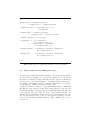
The paper “Generic Library Extension in a Heterogeneous Environment”,
by Oancea and Watt [7], explores the question of how to structure the gidl
C++ language bindings to achieve two high-level goals: The first goal is to design
an extension framework as a component that can easily be plugged-in on top
of different underlying architectures, and together with other extensions. The
second goal is to use gidl as a vechicle to export generic libraries to a distributed
environment. We address two questions: to what degree can gidl render the
native library interface and semantics, and what are the techniques that will
preserve the library coding idioms? In these contexts, the paper identifies the
language mechanisms and programming techniques that foster a better code
structure in terms of interface clarity, type safety, ease of use, and performance.
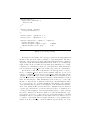
Another related paper [2] describes earlier results and synthesize experiments
of supporting parametric polymorphism across language boundaries.
All these documents can be found in the Doc/RelevantArticles folder.