1
Contents
1. Safety precautions..................................................................................... 2
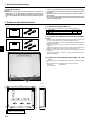
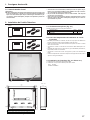
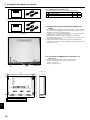
2. Installing the interface unit......................................................................... 3
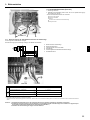
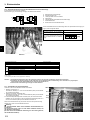
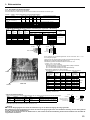
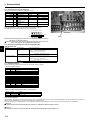
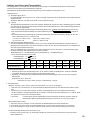
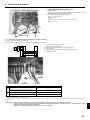
3. Electrical work ........................................................................................... 4
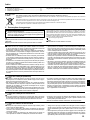
Note (Marking for
WEEE)
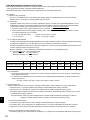
Guide to plan local applications ................................................................. 8
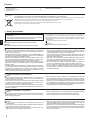
This symbol mark is for EU countries only.
This symbol mark is according to the directive 2002/96/EC Article 10 Information for users and Annex IV.
Your MITSUBISHI ELECTRIC product is designed and manufactured with high quality materials and components which can be recycled and reused.
This symbol means that electronic equipment, at the end-of-life, should be disposed of separately from your household waste.
Please, dispose of this equipment at your local community waste collection/recycling centre.
In European Union there are separate collection systems for used electrical and electronic products.
Please, help us to conserve the environment we live in.
1. Safety precautions
GB
Before installing the interface unit, make sure you read all the “Safety
precautions”.
Please report to your supply authority or obtain their consent before
connecting this equipment to the power supply system.
Warning:
Precautions that must be observed to prevent injuries or death.
Caution:
Precautions that must be observed to prevent damages to the unit.
Warning:
• The unit must not be installed by the user. Ask an installer or an authorised
technician to install the unit. If the unit is installed improperly, electric
shock, or fire may be caused.
• For installation work, follow the instructions in the Installation Manual and
use tools and pipe components specifically made for use with refrigerant
specified in the outdoor unit installation manual.
• The unit must be installed according to the instructions in order to minimize the risk of damages by earthquakes, typhoons, or strong winds.
Improperly installed unit may fall down and cause damage or injury.
• The unit must be securely installed on a structure that can sustain its weight.
If the unit is mounted on an unstable structure, it may fall down and cause
damage or injury.
• All electric work must be performed by a qualified technician according to
local regulations and the instructions given in this manual. The unit must
be powered by dedicated power lines and the correct voltage and circuit
breakers must be used. Power lines with insufficient capacity or incorrect
electrical work may result in electric shock or fire.
After installation, perform the test run to ensure normal operation. Then explain the
“Safety Precautions,” use, and maintenance of the unit based on the information in
the Operation Manual to your customer. Both the Installation Manual and the Operation Manual must be given to the user. These manuals must always be kept by
the actual users.
:Indicates a part which must be grounded.
Warning:
Carefully read the labels attached to the unit.
• Only the specified cables can be used for wiring. Connections must be
made securely without tension on the terminals. If cables are connected or
installed improperly, It may result in overheating or fire.
• Terminal block cover panel of the unit must be firmly fixed. If the cover
panel is mounted improperly, dust and moisture may enter the unit, and it
may cause electric shock or fire.
• Make sure to use accessories authorised by Mitsubishi Electric and ask
an installer or an authorised technician to install them. If accessories are
improperly installed, it may cause electric shock, or fire.
• Do not remodel the unit. Consult an installer for repairs. If alterations or
repairs are not performed correctly, it may cause electric shock or fire.
• The user should never attempt to repair the unit or transfer it to another
location. If the unit is installed improperly, it may cause electric shock or
fire. If the interface unit needs to be repaired or moved, ask an installer or
an authorised technician.
1.1. Before installation (Environment)
Caution:
• Do not install the interface unit in outdoor location as it is designed for
indoor installation only. Otherwise electric shock or breakdown may be
caused by water drop, wind or dust.
• Do not use the unit in an unusual environment. If the interface unit is installed
or exposed to steam, volatile oil (including machine oil), or sulfuric gas, or
exposed to briny air, the internal parts can be damaged.
• Do not install the unit where combustible gases may leak, be produced,
flow, or accumulate. If combustible gas accumulates around the unit, it may
cause fire or explosion.
• When installing the unit in a hospital or in a building where communications equipment are installed, you may need to take measure to noise and
electronic interference. Inverters, home appliances, high-frequency medical
equipment, and radio communications equipment can cause the interface
unit to malfunction or to breakdown. At the same time, the noise and electric interference from the interface unit may disturb the proper operation of
medical equipment, and communications equipment.
1.2. Before installation or relocation
Caution:
• Be very careful when moving the units. Do not hold the packaging bands.
Wear protective gloves to unpack and to move it, in order to avoid your
hands being injured by parts.
• Be sure to safely dispose of the packaging materials. Packaging materials,
such as nails and other metal or wooden parts may cause injury.
• Do not wash the interface unit. You may receive an electric shock.
1.3. Before electric work
Caution:
• Be sure to install a circuit breaker. If it is not installed, there may be a risk
of electric shock.
• For the power lines, use standard cables of sufficient capacity. Otherwise,
it may cause a short circuit, overheating, or fire.
• When installing the power lines, do not apply tension to the cables. The
cables may be cut or overheated resulting in a fire.
2
• Make sure to ground the unit. Do not connect the ground wire to gas or
water pipes, lightning rods, or telephone grounding lines. If the unit is not
properly grounded, there may be a risk of electric shock.
• Make sure to use circuit breakers (ground fault interrupter, isolating switch
(+B fuse), and molded case circuit breaker) with the specified capacity. If
the circuit breaker capacity is larger than the specified capacity, breakdown or fire may result.