1
Recommendations for a successful treatment
Prior to measuring root canal length with your
Digital Apex Locator:
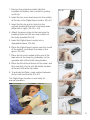
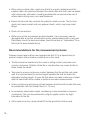
• Make sure that the pulp chamber 1 is dry before
inserting the measuring file. It is recommended to dry
the pulp chamber with a cotton pellet or by a slight
aspiration of the moisture with an aspiration syringe.
Also ensure that all canals are isolated from each
other. Excessive fluids in the pulp chamber or canals
may form a conductive bridge between canals or with
a metallic restoration or crown. Drying the canal with
a paper point may help increase accuracy.
• When the walls of the pulp chamber are damaged 2 , or there are damaged
fillings 3 , saliva leakage can occur from the oral cavity, which will prevent
drying of the chamber. A moist chamber may cause the immediate formation
of a closed electrical circuit, i.e., a short circuit. In this event, the apex locator
will issue a warning (flashing red LED and audible alarm) as if it reached the
apex (false positive reading). In such cases the missing chamber wall should
be temporarily restored, but only with nonconductive materials such as
Composite, IRM, GI (glass iononer), etc. After restoration, a dry chamber can
be achieved and accurate measurement can be reached.
• Check that any damaged fillings 3 have been removed in order to prevent
marginal leakage. Such leakage will result in a moist working area and may
interfere with the Digital Apex Locator’s reading. The red light will flash,
indicating that it has identified the apex when in fact, the file is only at the
canal entrance area.
• Continuous contact with metal or amalgam fillings will ground the device, so
take special care to prevent contact between the file and any existing metalbased restoration of the tooth by amalgam filing or metal crown. In such
instances, an adequate isolation of the file from the metallic environment can
be achieved by fitting 2-3 rubber stoppers onto the part of the file that may
contact the metal of the restoration.
• A preliminary extirpation is recommended before beginning measurement.
Residual tissue may result in a premature and erroneous reading.
15