1
Appendix J. Final Technical Report Grant Number 09-1100
4
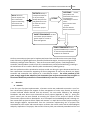
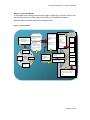
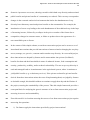
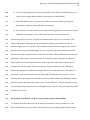
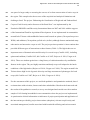
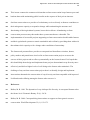
Where xi is a vector of other determinants of participation and outcomes of interest for the
household i, such as several socio-economic characteristics of the sample, the environment, and the
location of households; ω, λ and θ are the parameter vectors of the equations’ system, measuring
the effects of the exogenous variables on our considered outcomes, respectively Household Benefits,
Crop Diversity and Adoption of practices, while ei , ui and vi are the error components.
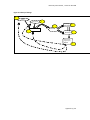
The model measures through the estimation of the parameter γ whether the household was drawn
from the sample of ex ante participants (Participation == 1) or from the one of non participants
(Participation == 0) and the consequent effects on the application of innovations. Parameter β
provides quantitative estimate of the impact of project interventions on crop diversity, while
parameter δ accounts for the additional benefits obtained by a household from this diversity. Within
this specification, we are implicitly assuming that ex-ante participation may influence crop diversity
only through the application of innovation. Moreover, the application of innovation may influence
additional benefits obtain by a household only through the use of crop diversity.
The variable used as indicator of the application of innovations was the number of innovations
applied by a household. The indicator of crop diversity was the result of a factor analysis performed
on the number of farmer varieties of all target crops planted by a household. The indicator for the
benefits to a household was the quantity of produced target crops consumed and marketed. In one
project, however, the indicator was a life satisfaction index derived from a series of ratings on the
level of satisfaction experience by the household with respect to different variables such as housing,
access to education, economic activities, social life and contacts, as well as nutrition and food
security. The data from the two projects from Bolivia were merged to increase the sample size and
statistical power given that both projects were implemented by the same institution in the same
general geographic area and involved almost the same interventions.
Results
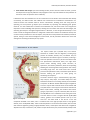
Households in projects’ sites have very small landholdings, are typically composed of speakers of
indigenous languages, either Quechua or Aymara, and are headed mostly by middle-aged men with
low levels of formal education, low levels of migration and few sources of income outside their own
agriculture. When there are other sources of income, they are frequently non-farm labor and very
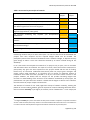
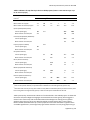
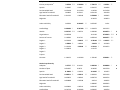
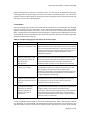
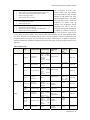
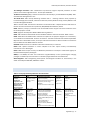
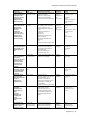
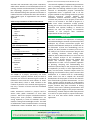
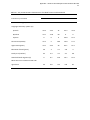
few households receive remittances (Table S3). The households, however, maintain an important
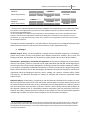
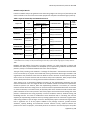
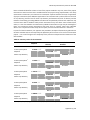
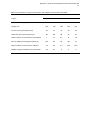
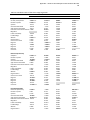
amount of crop diversity in spite of the small landholdings (Table 1), both in terms of crop species
and farmer varieties (i.e. crop populations within a crop that farmers recognize as distinct units).
Households tend to grow many more species than those targeted by the studied on-farm
conservation projects. A special case is a project implemented in Ecuador by a farmer organization
that shows by far the highest level of infra and inter-specific crop diversity. The data show relatively
poor marginal households maintaining important amounts of native crop diversity in a center of
origin and diversity for these crops.
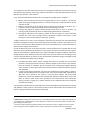
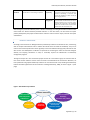
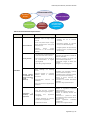
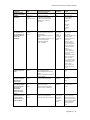
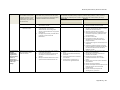
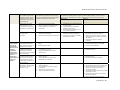
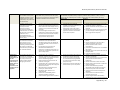
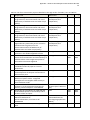
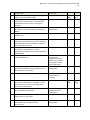
The on-farm conservation projects that were subjects of the study implemented between 13 and 19
interventions per project, for a total of 79, with different aims that included: (a) improving the
knowledge and enhancing access of farmers to information and planting material of a diversity of
targeted native crops; (b) improving the agronomic management of the crops, particularly in terms
of pests and diseases; (c) training local farmers to provide advice to others; (d) improving the