1
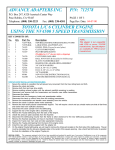
To do this conversion I harvested from a donor FJ62:
•
•
•
•
•
•
•
•
•
•
•
•
•
•
•
•
•
•
•
•
•
•
•
•
•
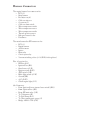
The head with thermostat housing, tubes, sensors, and switches.
Exhaust manifolds.
Exhaust flanges.
Ox sensor flanges.
Complete induction, including throttle body with TPS, ISC, along with all hoses,
and tubes.
AFM with air tube to throttle body and attached hoses.
The air box is optional, and I didn’t use it.
Fuel rail with injectors, regulator, and damper.
Fuel lines at the front and back of the valve cover that attach to the fuel rail at the
damper and the regulator. Don’t bend them getting the head off.
ECU from behind the glove box. 89661-60021 (89661-60020 in 1988)
Throttle pedal. I also got the hand throttle.
Throttle cable.
Main computer relay located under the airbox. 85915-60010
Circuit Open Relay located in the passenger side kick panel. 85910-14020
Coil with ignitor.
Distributor. There are no aftermarket alternatives at this time.
Engine wire harness.
Main harness that runs under the dash from the fuse block to under the hood
VSV for the fuel pressure regulator. It’s part of a 3-way block of VSVs on the driver’s
fender. I’ll discuss this in more detail later.
If installed in a smog equipped truck the AI and EGR systems will need to be
harvested too.
Heater distribution pipes that run on the passenger side of the valve cover attached
to head.
Fuel pump block off plate. I made my own.
All of the little things associated with the above.
The 1986 motor already had the 2F side cover with the indent for the large cap
distributor. This will not be provided by the FJ62 donor.
The 2F also needs to have flat-top pistions. Early dome top pistons will not work
with the 3FE head.
It’s a good idea to get as many of the hoses as possible. In some cases harvesting was easier if I
cut some hoses and replaced them later. I found that most of them are not that expensive
from the dealer.
Disabling Emissions
Since my motor went into a smog-exempt 1969 FJ40 I choose not to install the EGR and AI
systems. This significantly simplified the motor and kept the space under the hood tidy.
Disabling the EGR is one area where there are multiple solutions. Others have used threaded
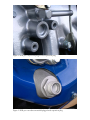
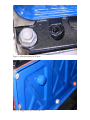
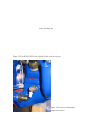
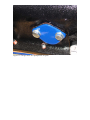
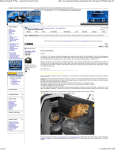
caps and block off plates. My solution was to pound in expansion plugs (Figs. 1 & 2). There
were two I needed. One goes on the fitting on the exhaust manifold (.75”), and the other
goes on the plenum where the EGR valve lived (.829”/21mm). Both are a tight squeeze, but
they fit. This was a clean and cheap solution.