1
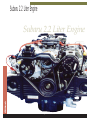
Subaru 2. 2 Liter Engine
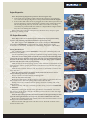
Cross Flow Cylinder Head
The
End Wrench
Camshafts
Cylinder Heads
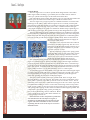
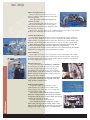
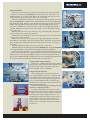
The 2.2L engine uses a crossflow cylinder head design similar to the 1800cc
OHC engine. Better breathing is provided by the two intake and two exhaust
valves per cylinder which improves the intake and exhaust flow.
Fine-tuned high velocity intake and exhaust ports are used. The dual intake and
exhaust ports are siamesed to further improve intake and exhaust flow.
The 2.2L engine uses a compact pentroof combustion chamber versus the bathtub design of the 1800cc/2700cc Subaru engines. It has a centrally located spark
plug which provides the quickest, most efficient combustion with a uniform flame
front from the plug to the top of the piston. This, combined with the 30 degree
valve angle compliments the pentroof combustion chamber shape optimizing low
and medium speed torque. The cylinder heads are interchangeable left to right.
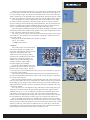
The 2.2L turbocharged engine cylinder heads have been modified to withstand
increased internal combustion pressures. The coolant passages have been changed to
match the closed deck design of the crankcase. These heads are not interchangeable
from side to side nor with the N/A engine cylinder heads. There are three holes in
the right cylinder head for the turbo oil supply, oil
return, and coolant return.
The intake valves and seats have been reduced
to 27mm for the turbo engine only. The valve seat
material for both the intake and the exhaust valves
has been changed to increase hardness to provide
a greater resistance to wear.
The valve train uses a single valve spring system
versus the dual spring system of the 1800cc engine.
The intake valves are larger than the exhaust
valves. The valve seal color determines location:
Rocker Shaft Assembly
intake seals are black, exhaust seals are brown.
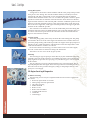
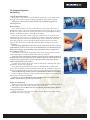
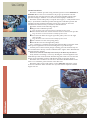
The camshaft bearing journals are located in the cylinder head. This design
improves camshaft support. The left camshaft is longer than the right camshaft to
properly align the cam belt sprockets due to cylinder head offset. A camshaft support bolts to the front of the left cylinder head to support the camshaft. A retaining
plate, with oil seal, is attached to the rear of the left cylinder head. The rear of the
right cylinder head has a cover plate which also serves as a thrust plate.
A camshaft support has been added to the right side of the turbocharged engine
to supply oil to the turbo and return coolant from the turbo. Oil and water separation is provided by an o-ring. The camshaft has a different profile designed to
match the operating characteristics of the turbo engine.
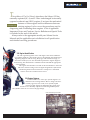
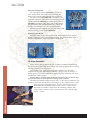
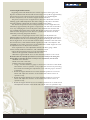
The rocker shaft assembly bolts to the cylinder head. There are eight bolts
through the three cast iron supports. The intake valves have individual rocker
arms, while a siamese rocker arm is used for each two exhaust valves. The all
aluminum rocker arms have a sintered metal slipper as the cam contact. A pressed
lead aluminum bushing is used for each rocker arm bearing surface. The position
of the spring washers on the steel rocker shaft provide proper rocker alignment
and spacing. These spring washers must be returned to their original position. The
rocker shaft is part of the oiling system providing oil
flow to the rocker bearing surfaces and HLAs. Relief
valves at both ends of the rocker shafts maintain stable oil pressure to the HLAs.
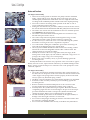
Note: The roller rocker cam follower system that
was introduced on the 1.8L Impreza engines, is
installed on all 1995 model year and later 2.2 liter
engines. The roller assemblies are not serviceable
separately, but the rocker arms may be serviced as
individual units.
Roller Rocker Cam Followers
6