1
CUSTOMER
S PO T L I G H T
a port, is the nation’s transportation,
culture and economic hub.
Tropic Air - FLYING HIGH WITH CARAVANS IN
BEAUTIFUL BELIZE
Down the coastal highway lies Dangriga, called the “cultural capital of
Belize.” The area is home to Sittee
River resorts, which draw divers and
travelers hoping to observe the world’s
largest fish species, the whale shark.
The coast has some of the country’s
best beaches, and visitors can travel
inland to a preserve and try to spot the
elusive jaguar.
For Tropic Air, a domestic airline
in Belize, something simple sealed its
commitment to flying Cessna
Caravans: Once the company started
flying the 208B aircraft, it started
making money.
Steve Schulte, CEO and co-owner of
the Central American airline, says
he launched a personal campaign to
get the Caravan after joining founder
Johnny Greif III in the business in 1991.
At the time, Tropic Air flew Twin Otters
and had difficulty making money with
the two-engine aircraft. Getting the
airline’s first Caravan took until 1994
when a local businessman bought one
and leased it to them.
“That turned the tide as far as making
money,” Schulte says. “It was
immediately apparent that the
Caravan was economical.”
Caravan is Perfect Plane for
Their Mission
Tropical, tourist-attracting Belize is
just 180 miles from tip to tip, nestled
along the Caribbean between Mexico
and Honduras. Tropic Air flights are
nearly all short hops, with missions
running about 12 minutes, and the
airline averaging 5.3 cycles per hour.
Most flights are to points dotted along
the coast or on barrier-reef islands, as
well as to the inland capital of
Belmopan and to Flores, Guatemala.
Outside of Flores and Philip S. W.
Goldson International Airport serving
Belize City, the strips it reaches are
unimproved and just 3,000 to 6,000 feet
long - a perfect environment for
Caravans – Tropic Air flies nine,
including two delivered in November.
“We fly into some pretty rugged, poorly
maintained runways,” Schulte says.
page
2
A bit farther south is Placencia, on a
peninsula with miles of sandy beaches,
diving and snorkeling on the nearby
reef. Placencia also is a habitat of
the whale shark, and is the fastestgrowing resort community in Belize.
Tropic Air’s southernmost destination is Punta Gorda, which has native
Mayan villages and cultural and fishing
resorts.
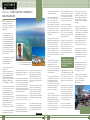
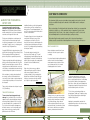
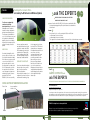
Belize in the Caribbean between Mexico and Honduras.
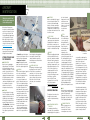
Steve Schulte, CEO and C0-Owner, Tropic Air.
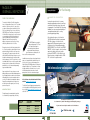
Two recent Caravans added to their fleet.
“We needed its stall characteristics. The
Caravan is about the only modern, stillin-production aircraft we can use.”
The international flights streaming into
Goldson provide a tight window of operation, as they all arrive between noon and
4:30. That means the airline, operating
day VFR, must get passengers up and
down the coast quickly before sunset. Up
to five Caravans operate on some flights,
with up to 200 daily missions.
“One thing we didn’t realize at first was
that the Caravan’s higher speed gave us
more cycles to work with,” Schulte says.
Tourists Come for Sea, Sand,
Culture, Archaelogy
For such a small country, Belize has
incredible environmental diversity that
draws sightseers from around the world.
“Our business is up 20 percent this year,”
Schulte says. “Belize has retained its
natural beauty, and is a destination for
environmentalists and people in love
with the sea. We have the largest living
barrier reef in the world, and the water is
crystal clear.”
Tourists can snorkel, sail, swim and fish
in the blue waters off Ambergris Caye,
the largest and northernmost of Belize’s
200 coastal islands, and its main town,
San Pedro, is Tropic Air’s home. Caye
Caulker, just south, is more laidback and
less developed, a draw in itself, Schulte
says.
To the north along the border is Corozal,
which draws tourists backpacking from
Mexico and Belizeans taking day trips to
shop in Chetumal, Mexico. Belize City,
In addition to those stops, Tropic Air
also flies to Flores, Guatemala, a
launching point for visits to the
immense Mayan ruins at Tikal. Except
for a Cessna 172 used for charters and
two Gippsland Airvans, passengers fly
on Caravans, and like it.
“Belize is a fairly new destination and
is still drawing a lot of tourists who
haven’t been to places where they
have to fly in small planes,” Schulte
says. “They say, ‘I never flew in a small
airplane before but I’d rather fly in a
small airplane than in a big one
because I can see everything.’ ”
Growing an Airline
Schulte’s first trip to Belize convinced
him to become a pilot. He’d gone
through ground school when younger
but hadn’t pursued his license until
seeing the pilot of a Beech Baron
become ill over the Gulf of Mexico.
After that unsettling experience, he got
his ticket back home in Moline, Ill.
PLEA SE S EE NE X T PAG E
page
3
Schulte ran a medical practice there but
retired to Belize in 1990 – “and when I
failed at that I got into the airline business.” A friend of the Greif family, he
became co-owner in 1991 and found an
airline quite like a medical practice.
“It was very similar to managing
doctors,” he says. “It’s a time-sensitive
service and if that time passes and
nobody’s in that seat, the income is lost
forever. It’s a service-oriented business
and a high-tech business. And you’ve got
about the same liabilities.”
The purchase of the airline’s next and
subsequent Caravans came via Cessna
Finance. “After we got the second
Caravan, our two competitors chose not
to buy Caravans. The Caravans were
faster, more comfortable with better
seats and nice windows to view the reef
and sea.”
“Within a matter of four
or five years, as we added
Caravans, our competitors
shrank away.”
On most flights Tropic Air uses one-man
crews, carrying 14 passengers, including
one in the co-pilot’s seat. “We’ve met a
lot of Cessna pilots over the years. They
say, ‘I’m a pilot, can I sit up front?’ We
like to have fellow aviators in the right
seat.”
Flying in Belize poses its challenges. The
frequent cycles ask a lot of any plane, of
course. Then there are localized storms
and the extremely high-salt environment, especially at its San Pedro base,
where it does its maintenance. Schulte
says they’ve been amazed at how well
the corrosion-proofing works.
Tropic Air is on its 16th and 17th
Caravans, and currently operates nine.
Recently it sold one with 50,000 cycles.
“We don’t really see a specific useful
life of the airplane. Our only decision for
replacement is technological,” Schulte
says. “You’re buying something that will
last our lifetime and the only reason
you’d want to replace it is to upgrade the
technology.”
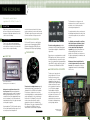
For them, that new technology is the
Garmin 1000 cockpit. Schulte and Greif
are longtime converts to GPS – dropping
out of the clouds on a charter flight, lined
up with a mountainside, tree-lined
airstrip will do that. The Garmin 1000
takes technology and safety to another
level with Terrain Awareness and
Synthetic Vision, the field is on the
screen while you’re still in the clouds.
The airline intends to extend its route
into Honduras, to San Pedro Sula and
Roatan, and would like to develop an
inter-line agreement with La Costena,
the Nicaraguan airline and Cessna
dealer.
“Our expertise is in the Caravan and in
small, emerging markets, and I see a lot
of growth potential for that, without
penetrating the mountain chain of
Central America,” Schulte says.
And Tropic Air has just the equipment
to serve its coastal niche. “We can attest
that, at five cycles per hour, the
Caravan is a nearly bulletproof
airplane,” Schulte says.