1
more than the other. To aid in even feeding, parallel windrows should
be fed to the centre of the feeder opening. In angled windrows, the
windrow should be fed slightly off-centre so that the heads are in the
centre of the feeder.
Stone Protection: Stones and other hard objects were
removed as they travelled up the feeder house and passed between
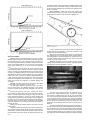
the powered stone ejection roller and trap door (FIGURE 10).
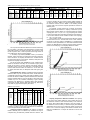
FIGURE 8. Total Grain Loss in Columbus Wheat (C).
FIGURE 10. Stone Protection: (1) Stone Ejection Roller, (2) Trip Door, (3) Feeder Conveyor
Chain, (4) Feeder House.
FIGURE 9. Total Grain Loss in Neepawa Wheat (D).
QUALITY OF WORK
Picking: Windrows were picked using a 10 ft (3.0 m) Victory
windrow pickup. Pickup height was adjusted so that the pickup teeth
just scratched the ground. The pickup speed was controlled from
the cab and adjusted according to windrow conditions and forward
speed. The windguard was set to de ect the crop under the table
auger without restricting crop ow. It was removed for rapeseed
crops.
Pickup performance was good in all crops encountered. It had
adequate picking ability to utilize the combine’s capacity. It picked
cleanly in average crops at speeds between 3 and 6 mph (4.8 and
9.6 km/h). The variable speed drive on the combine would not allow
adequate speed reduction to match pickup speed to ground speeds
slower than 3 mph (4.8 km/h). At operating speeds greater than
6 mph (9.6 km/h) pickup loss increased signi cantly. The transfer
drapers and windguard provided smooth crop ow under the table
auger. Even without the windguard, in rapeseed feeding was
acceptable.
Feeding: The table auger fed the windrows to the slatted
conveyor chain, which carried the crop to the rotors.
The table auger clearance, crop stripper, auger nger timing,
and slip clutch tension were adjusted according to the operator
manual. The feeder chain speed was adjustable from within the
cab.
Feeding was good for most crops. Feeding was smooth
and consistent in wheat, barley, and uniform rapeseed windrows.
However, the table auger frequently plugged in long rye straw and
bunchy rapeseed windrows. In the long rye straw, plugging was
usually due to crop backfeeding over the feeder conveyor. Operating
the feeder conveyor at maximum speed helped reduce backfeeding.
Increasing auger slip clutch tension would have made the table
auger more aggressive, but would have increased the possibility of
plugging the rotors.
Feeding was slightly restricted with the stone roller set in the
lowest position.
Windrow condition and operating were critical to feeding both
rotors equally. The most uniform feeding occurred in double side-byside windrows and wide loosely formed windrows. Narrow densely
formed windrows were hard to divide and tended to feed one rotor
Page
6
In stony conditions the powered stone roller was adjusted to
provide maximum stone protection. In stone free conditions, it was
raised to provide unrestricted feeding.
Most stones and hard objects were ejected. As a result there
was negligible rotor and concave damage. When operating with the
stone roller adjusted in the lowest position even a slight bunch in the
crop often caused the door to be “kicked” open. The door had to be
manually reset from outside the cab.
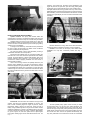
Threshing: Threshing was accomplished by the twin counterrotating rotors, adjustable threshing concaves, extension modules
and separating concaves (FIGURES 11 and 12).
FIGURE 11. Rotors. FIGURE 13. Material Build-up Behind Rasp Bars.
The rotors were powered through two gearboxes and a
torque sensing variable speed belt drive. The drive was positive
and provided a suitable speed range for all crops encountered.
The concave had adequate adjustment. Suitable threshing in grain
crops was obtained when using fast rotor speed and minimum
concave clearance. In rapeseed much slower rotor speed and wider
concave clearance were used to prevent over threshing. The rotor
speeds and concave settings used for the various crops are given in
TABLE 5.
The rotors were aggressive and plugging was not a problem. In
all crops encountered the Sperry New Holland threshed completely.
Even in hard-to-thresh crops such as Neepawa wheat, unthreshed
losses were low and grain cracks minimal. This aggressive threshing
caused severe straw break-up in dry conditions. In tough conditions,
unthreshed loss was still acceptable although the maximum feedrate