1
maintenance
All cooling and heating equipment should be serviced before
each season to assure proper operations. The following items
may be required to have more frequent service schedule
based on the environment in which the unit is installed, and the
frequency of the equipment operation.
Blower Assembly
The blower assembly includes the bearings, drive sheaves and
belts.
All bearings are permanently lubricated and do not require
additional lubrication. Bearings should be checked for any
unusual wear and replaced if needed.
Drive sheaves should be checked at the same time the bearings
are inspected. Check to make sure the sheaves are in alignment
and are securely fastened to the blower and motor shafts.
Belt tension should be rechecked shortly after the unit has been
installed to check for belt stretching. After the initial start-up,
monthly checks are recommended.
Filters
If the unit is supplied with a dirty filter switch, replace the filters
any time the Carel controller provides a dirty filter alarm notice.
Units without a dirty filter pressure switch should have the filters
checked monthly. Replace if necessary. In dirty atmospheres,
filter maintenance may be required more often.
Electrical Wiring
The electrical wiring should be checked annually for loose
connections or deteriorated insulation.
Cooling Coil Drain Pan and Drain System
The combination of airborne particles and moisture within the
unit can result in algae and microorganism formation in the
drain pan and trap. The drain pan, trap, and drain pipe must be
cleaned regularly to avoid blockage that can reduce or stop
water flow as follows:
1. At the beginning of the cooling season, inspect and clean
the entire cooling coil cabinet and condensate drain pan to
remove dirt, algae, and other contaminants.
2. Inspect and clean the condensate drain trap and piping.
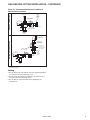
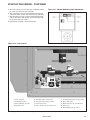
The use of a cleanout opening at the top of the trap (see
Figure 5.1) can help facilitate this maintenance.
3. Fill the trap with water to ensure proper operation and
replace the cap on the cleanout opening to close the
system.
4. During the end of cooling season shutdown of the system,
disconnect and remove all water from the trap and drain to
prevent freeze damage. If local building codes permit, the
trap may be filled with an antifreeze solution.
5. If the unit is used year round, regularly inspect and clean
the cooling coil cabinet, condensate drain pan, and trap/
drain system to ensure that proper function.
6. Depending on climate, freeze protection of the trap may be
required during non-cooling days.
Coil Maintenance
1. Periodic inspection of the coil for signs of corrosion and for leaks is recommended. Repair and replacement of the coil and the connecting piping, valves, etc., should be performed as needed by a qualified technician.
2. Should the coil surface need cleaning, caution should be exercised in selecting the cleaning solution as well as the cleaning equipment. Improper selection can result in damage to the coil and/or health hazards. Clean the coil from the leaving air-side so that foreign material will be washed out of the coil rather than pushed further in. Be sure to carefully read and follow the cleaning fluid manufacturer’s recommendations before using any cleaning fluid.
Note: The condenser coil is constructed of aluminum
materials and contains refrigerant under high pressure. Do
not use acidic solutions to clean the coil, as it could lead to
corrosion.
3. The use of filter-dryers in the system piping is recommended
along with a sight glass that has a moisture indicator. Replace the filter dryer(s) as needed.
Duct Furnace
When providing annual maintenance for the duct furnace, keep
the unit free from dust, dirt, grease and foreign matter. Pay
particular attention to:
1. The power exhauster discharge opening and the
combustion air inlet louvers.
2. The main burner orifices (avoid the use of hard, sharp
instruments capable of damaging surfaces for cleaning
these orifices). To check the main burner orifices, see for
Manifold Assembly Removal.
3. The heat exchanger should be checked annually for cracks
and discoloration of the tubes. If a crack is detected, the
heat exchanger should be replaced before the unit is put
back into service. If the tubes are dark gray, airflow across
the heat exchanger should be checked to insure that
a blockage has not occurred or the blower is operating
properly.
4. The gas valves and piping should be checked annually for
general cleanliness and tightness.
5.The gas controls should be checked to insure that the unit
is operating properly.
Manifold Assembly Removal
1.
2.
3.
4.
Shut off gas and electric supply.
Open the duct furnace control access compartment doors.
Disconnect gas manifold at ground union joint.
Remove the screws holding the manifold to the heat
exchanger support.
5. Slide the manifold through the manifold bracket.
6. Clean the orifices as necessary.
7. Follow steps 3-6 in reverse to install the manifold assembly.
8. Turn on the electric and gas supply.
9. Check the ground union joint for leaks with a soap solution.
Tighten if necessary.
10.Close the duct furnace control access compartment doors.
MCP15-500.0
21