1
Chapter 23
a shop fan to blow cool air through the radiator and across the
engine surface. Allow the engine to cool down until the coolant
is no longer boiling (at least thirty minutes). Slowly open the
radiator cap, then start the engine. While running the engine
at a fast idle, slowly add water to the radiator. The pump will
mix the hot coolant and the cold water. Run the engine until
the temperature is normal. If the engine begins to overheat
again, shut it off. Then, recheck the radiator coolant level. If the
coolant level is correct, find out what is causing the engine to
overheat and correct the problem.
Overheating Protection
On some newer cars, a special type of overheating
protection is used. If the engine begins to overheat, the
computer will shut down some cylinders by turning off the fuel
injectors to those cylinders. The usual procedure is to turn off
alternating cylinders in the firing order. If the firing order is
1, 3, 6, 2, 5, 4, for instance, the computer will shut down cylinders 1, 6, and 5. This allows the engine to operate as smoothly
as possible while the cylinders cool down. After they cool
down, their fuel injectors are turned back on, and the fuel
injectors for cylinders 3, 2, and 4 are turned off. The cycle
repeats as necessary. By causing the engine to run on alternating cylinders, this method ensures no one cylinder is
allowed to become too hot.
Antifreeze
In all areas where temperatures may drop below freezing
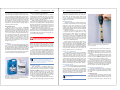
(32°F or 0°C), it is necessary to keep antifreeze, Figure 23-3,
in the cooling system to prevent engine damage. In addition,
an antifreeze and water mixture is better than plain water at
transferring heat in hot weather. Antifreeze contains rust inhibitors, which prevent damage to the engine, radiator, and heater
core, as well as small amounts of water-soluble oils, which lubricate the coolant pump seals and heater shutoff valves.
Cooling System Service
455
Ethylene and Propylene Glycol Antifreeze
In the past, many liquids were used as antifreeze,
including kerosene, denatured ethyl alcohol, and methanol
(wood alcohol). There are several compounds used to make
antifreeze solutions. The first is called ethylene glycol. This
antifreeze is sometimes called EG coolant.
Ethylene glycol will freeze at roughly 9°F (–13°C). When
ethylene glycol is mixed with water, which has a freezing point
of 32°F (0°C), the resulting mixture has a freezing point lower
than either liquid by itself. A half-and-half (50-50) mixture of
antifreeze and water has a freezing point of about –35°F
(–37°C). A mixture of 70% antifreeze and 30% water will not
freeze until the temperature reaches –67°F (–55°C).
Ethylene glycol is not a fire hazard, and it does not harm
paint finishes. It does not readily evaporate at normal system
temperatures, and it can be used with high-temperature thermostats. Additionally, it can be left in the cooling system for up
to a year without causing problems.
Warning: Ethylene glycol antifreeze is poisonous
and must not be taken internally. Keep antifreeze
away from children and animals. Never put beverages
or drinking water in empty antifreeze containers.
The second type of antifreeze compound is propylene
glycol or PG coolant. Propylene glycol coolants are nontoxic
and are considered to be “environmentally safe.” However,
since all used coolants contain some levels of heavy metals
from the cooling system, used antifreeze must be disposed of
properly.
A 50-50 mixture of propylene glycol antifreeze and water
will freeze at –26°F (–32°C). A 60-40 mixture will freeze at
–54°F (–48°C). Increasing the antifreeze concentration above
70%, however, will cause the mixture’s freezing point to rise.
Most manufacturers recommend a 50-50 mixture of water and
antifreeze. EG and PG coolants should not be mixed together.
Note: Dyes are used to give antifreeze its color. The
color of a coolant can vary (green, blue, red,
yellow, orange, or pink) and has no bearing on its
composition or service life. Check a service manual for the
proper type to use in a given application.
Long-life Coolants
Figure 23-3. Conventional and long-life antifreeze comes in
one gallon containers. Be sure you know which type is used in
a vehicle before adding. (Jack Klasey)
Some manufacturers use long-life coolant in the
cooling system. This coolant can be used for 100,000 miles
(160 000 km). Long-life coolant may be referred to as organic
acid technology (OAT) coolant. This coolant is made without
silicates and other minerals that cause cooling system
deposits. Since this coolant is made with ethylene glycol, it
has the same freezing and boiling points as a conventional
coolant. Do not mix this antifreeze with other types, since this
will reduce the long-life properties of the antifreeze.
Long-life coolants have approximately the same freeze
points as conventional ethylene glycol coolant. A 50-50 mixture
456
Auto Diagnosis, Service, and Repair
will protect the cooling system down to –34°F (–36°C). The
boiling point is raised about the same amount as with conventional coolant. Also, like regular coolants, mixtures greater
than 70% coolant are not recommended. Some long-life
coolants come prediluted 50-50 from the manufacturer, eliminating the need to add water.
Mixing Antifreeze
All vehicle manufacturers recommend keeping at least a
50-50 mixture of water and antifreeze in the cooling system at
all times. The correct amount of antifreeze to use is determined by the capacity of the cooling system. For example, a
20-quart cooling system should have 10 quarts of antifreeze
and 10 quarts of water. Never try to save money by adding just
enough antifreeze to get by.
Always use clean water to top off the antifreeze solution.
In most areas, tap water is acceptable for use in cooling
systems. However, the water supply in some localities has
high concentrations of lime, minerals, and acids. Water
containing these minerals is known as hard water. Hard water
can cause layers of chemicals to build up in the cooling
system, reducing the transfer of heat from the metal to the
coolant. If your area has this type of water, use another source
of water, such as bottled distilled water.
Modern engines and cooling systems contain cast iron,
aluminum, steel, brass, copper, and various types of solder.
These dissimilar metals can cause electrolysis (creation of
an electric current) in the system, with resulting damage to the
metals. An increasing cause of electrolysis is defective or
missing ground wires, as well as poorly grounded aftermarket
accessory systems. Electrolysis due to poor grounds can
destroy a radiator, heater core, or an entire engine.
Useful Life of Antifreeze
The cooling systems of most new cars are filled with a
mixture of antifreeze, rust inhibitors, pump lubricant, and clean
water. Unless excessive coolant is lost for some reason,
coolant can be left in the system for the time period recommended by the manufacturer. This time period for conventional
coolant is usually about 24 months. Long-life coolants can be
left in for a much longer period. It is suggested the recommendations of the manufacturer be followed regarding the type of
antifreeze and length of use. Failure to comply with the manufacturer’s recommendations may void the vehicle’s warranty.
Checking Antifreeze
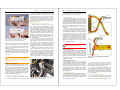
To test the coolant protection level at operating temperature, use an antifreeze hydrometer, Figure 23-4. Most
antifreeze hydrometers have some form of temperature
correction, so they can be used with hot or cold coolant. Draw
the coolant in and out of the hydrometer several times to bring
hydrometer temperature up to coolant temperature. When
using the test unit, follow manufacturer’s instructions.
Note: A battery hydrometer cannot be used to
check antifreeze.
Figure 23-4. One type of antifreeze hydrometer being used to
check the concentration (percentage) of antifreeze in the
system. (Jack Klasey)
Another tool that can be used to check antifreeze is a
refractometer. To use a refractometer, take a small sample of
coolant from the radiator. Place a few drops on the refractometer lens. Look through the refractometer to get the freeze
point reading.
Some shops now use test strips to quickly check engine
coolant. Chemical test strips can check coolant for freeze
protection, as well as its alkalinity or pH level. However, most
test strips can only be used for conventional coolants.
To perform the test, remove one strip from the container.
Be sure to close the container, since the color chart is often on
the side. Dip the test strip in the engine coolant, making sure
both test spots are immersed. Remove the test strip and wait
approximately 30 seconds. Compare the two test sections to
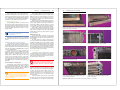
the color chart that comes with the strips, Figure 23-5.
Cooling System Maintenance
Cooling system maintenance includes coolant replacement, locating leaks, and checking for proper fan operation.
If a cooling system is properly maintained, flushing is usually
not needed.
Coolant Replacement
To perform a simple coolant change, operate the engine
until the thermostat is open (the top radiator hose is hot). Shut
off the engine and place a drain pan under the petcock, then
open the petcock. Allow the coolant to drain into the pan.