1
18.1 INTRODUCTION
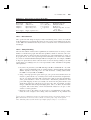
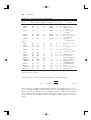
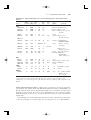
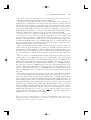
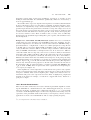
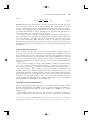
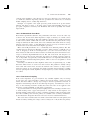
TABLE 18.1.
Source
Major Sources of Noise in Front Ends
Type
Photocurrent
Load resistor
Amplifier
Amplifier
Shot noise
Johnson noise
Input current noise
Input voltage noise
Power supply
Ripple, regulator noise
18.1.1
689
Formula
iNshot = (2eId )1/2
iNth = (4kT /R)1/2
iN as specified
vN as specified
Dominates When
Bright light, large RL
Dim light, small R
Ideally never
Dim light, large RC , or a fast,
noisy amp
Only by blunders
Noise Sources
Since good front end design is largely a matter of balancing noise sources, it would be
worth beginning by reviewing the discussion of noise sources and calculations in Section
13.6.2. Table 18.1 summarizes the major sources of electronic noise encountered in front
end design.
18.1.2
Sanity Checking
Since the first edition of this book was published, the author has been receiving a certain
number of e-mails from people with detection problems, which are welcome. One common feature that has emerged is that specifications for optical instruments are often set
by people who are, ahem, not expert in optical measurements.† One of the most common
is to insist on wide bandwidth with high SNR at low light levels, for example, 50 MHz
at 20 pA of photocurrent, which cannot be done for reasons having nothing to do with
circuit design. Accordingly, here are a few representative rules of thumb for frequently
asked questions:
1. If you have N photons/s, your SNR will drop to 0 dB at a bandwidth B = N/2 Hz.
This is an inescapable limit based on counting statistics. Your maximum achievable
SNR is N /(2B), so since 20 pA is 1.24 × 10⁸ electrons/s, counting statistics limit
the SNR to 1.24 (0.9 dB) in 50 MHz.‡
2. Using a few high precision parts doesn’t get you a precise measurement. You can
measure a photocurrent very accurately, but accurate measurements of light intensity are very hard, and 24 bit A/D converters don’t help. It isn’t that photodiodes
aren’t good transducers—there are none better—but that the problem isn’t well
posed. The mapping of what you actually care about onto the photocurrent is just
about always imprecise at the level of a percent or two, due, for example, to etalon
fringes, calibration drift, background light, glints, and so on. There are honorable
exceptions, but not that many, and no measurement whatsoever can give a clear
answer to a fuzzy question.
3. Physicists (such as the author) are often prone to oversimplifying circuit requirements. It is not enough to aim at being “shot noise limited” or “Rf limited” and
† I’d
have been less complimentary, but then you couldn’t show them this section when the problem comes up.
Miller and Friedman’s book, Photonics Rules of Thumb, was written partly to help cure this problem.
‡ Time– bandwidth product issues like this show up in digital signal processing too—see Section 17.5.