1
Home
S O I L
Contents
W A T E R
4. Selecting
a product
M O N I T O R I N G
4. Selecting a product
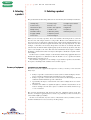
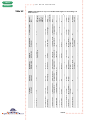
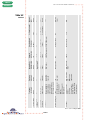
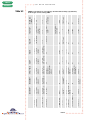
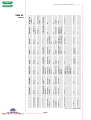
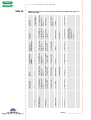
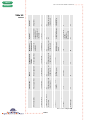
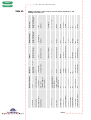
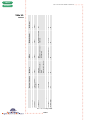
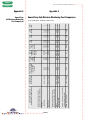
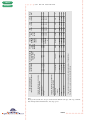
The products discussed in this publication are described by the following 19 attributes:
1. Reading range
8. Country of origin
15. Irrigation system suited to
2. Stated accuracy
9. Remote access
16. Best soil type
3. Measurement sphere
10. Link to other equipment
17. Application
4. Output reading
11. Interface to PC
18. Capital cost
5. Installation method
12. Affected by salinity
19. Annual operating cost
6. Logging capability
13. Expansion potential
7. Power source
14. Technical support
When you are selecting a product, choose the attributes most important to you from
the above list and compare them for each product. However, the dominant factor in
the selection process will not be physical/plant/soil based, but will invariably be the
trade-off between your initial capital investment and your ongoing labour cost. For
example, a tensiometer is relatively inexpensive but must be read daily and maintained weekly. A modern multi-depth logging system is relatively expensive, but data
can be sent straight to the office PC and viewed with little labour input. A further
intangible consideration is that it needs great discipline to maintain a regime of manual readings.
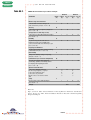
To this end, an economic analysis of soil-moisture-monitoring equipment has been
included in Appendix 6 to demonstrate that the lifetime cost of a product should be
included in the selection process.
Also included, as Appendix 5, is an example of a proforma for product selection that
incorporates both important attributes and economic aspects.
Accuracy of equipment
ACCURACY OF EQUIPMENT
The most contentious equipment description is ‘accuracy’. Accuracy can be stated in
many ways:
> ability to reproduce actual soil water status (from oven-dried samples) in laboratory-controlled conditions with and without specific calibration
> ability to reproduce actual soil water status (from oven-dried samples) in field
conditions with and without specific calibration
> repeatability: the degree of variation in consecutive readings taken over a short
time interval
> resolution: the number of significant figures to which a measurement can be
read, for example, an 8-bit device gives a resolution of 100 units/256 data steps
= 0.4% resolution.
The relevant measurement will depend on how the equipment will be used. For
instance, an irrigator applying water to relative set points may be interested only in a
sensor with a high repeatability.
As there is no universal, objective source of measured accuracy available, we have
used the manufacturers’ ‘stated accuracy’ in this package.
PAGE 8