1
Introduction
Hello, and thank you for your interest in or purchase of sympleSEQ!
This is the build manual for the project. You will find the schematics, as well as an assembly
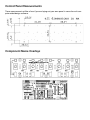
guide, printable drill template and tips on how to get the most out of sympleSEQ.
This project was born out of a serious lack of simple analogue hardware sequencers available
to build. There are oodles of sequencer designs out there, ranging from simple to complex,
but the actual construction of said devices is usually quite laborious, regardless of the electrical complexity/functionality. By design, a sequencer is a fairly simple device, so this tempts
many people to not use printed circuit boards when assembling one and just build it all on
perf-board. The actual logic circuitry for a sequencer is usually quite easy to understand - especially in the case of a design built around the CD4017 decade counter (known by many as
the “Baby10”) like this one. Where builders encounter hardships however is in the extreme
redundancy of wiring the controls for these devices. Each step in the sequence requires a
potentiometer (knob), toggle switch and LED at minimum. If you have ever soldered wires
to panel components, you probably know how delicate of a process it is -- it would be nice
to have four hands when doing jobs like this, making just a handful of controls take a decent
amount of time and endurance to complete -- let alone 8 or more sets of controls!
The general concensus is that in analogue synthesis, you can never have too many modulation sources. Despite its only providing 8 steps of control voltage, sympleSEQ can still satisfy
many builders with 16 or 32 step sequencers already dedicated to pitch modulation by providing extra modulation sources for filters or anything else you can control via control voltage.
Most of all however, sympleSEQ’s target audience is people new to do-it-yourself (DIY) synthesis. When most people think “analogue synthesizer”, something like Pink Floyd’s famous
tune “On the Run” probably comes to mind. So, it is only natural that nearly every beginner
lusts for the sound of an analogue sequencer. The task of building one for a beginner up until
now has been one of great difficulty for most, due to the lack of documentation and the extreme complexity of wiring such a thing to the panel for use afterwards.
Enter sympleSEQ: using a unique dual-board design, primarily board mount potentiometers,
LEDs and switches, you can build yourself a simple analogue step-sequencer with little electronics knowledge.
Note that sympleSEQ does not do every single thing that a more complex, large and expensive sequencer does. There may be some features you miss (voltage quantizing, forward/back
and other things are not included), but I think all of the essentials are here.
sympleSEQ was made possible only by the extensive online community of creative minds at
the electro-music and Muffwiggler forums. Were it not for people contributing their excellent suggestions on feature enhancements for the prototype design and me trying to satisfy
peoples’ requests, sympleSEQ would be nowhere near the product it is now!
Also, the cost of running such a product was made possible through pre-funding accumulated
by trustworthy individuals who supported the project financially from the beginning!