1
ECE Aspects of Zero-Energy House
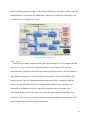
than the Arduino Mega 2560. This would require a smaller housing than the one made in this
revision. In addition, a housing would need to be made for the switching network which itself
could be optimized using surface mounted decoders and a printed circuit board (PCB).
Since the input stage of the DMM is being revised, the power connector which would carry
the output voltage of the selected panel to the DMM needs to be implemented using a connector
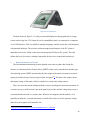
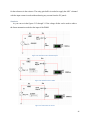
rated for at least 600V and 1A. Ideally this would be a BD connector as shown below where the
other wire would be earth ground.
Figure 5-1: BD connector (3.5 mm pitch)
The next block in need of optimization is the sensor network. This network consisted of the
hall-effect sensors which need a housing to shield to electronic components, and well as the ring
concentrator. In the design, the ring concentrators were estimated for 7 Gauss per Amp. This
design would result in resolution in the order of micro amps so the gain of the concentrator could
be lowered so that less material (ferrite or cold- rolled steel) is used per sensors.
As for the power blocks, the boost converters as they are can be modeled using an open-loop
control diagram. This should be modified so that it is self-adjusting. Thus it would become a
closed-loop system so that the 5V output could be maintained despite the fluctuation in the
battery’s output voltages. This could be done using the information the DMM’s built-in ADC
gathers about the battery by monitoring the MX7705’s reference voltage however, an analog
62