1
Principles of Mössbauer Spectroscopy
3
Chapter 1
PRINCIPLES OF MÖSSBAUER SPECTROSCOPY
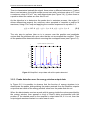
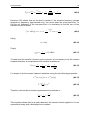
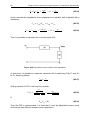
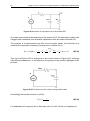
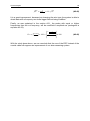
Rudolf Ludwig Mössbauer discovered at the end of the 50’s the recoilless resonant
absorption of gamma rays [1], also known as Mössbauer effect (ME). It consists in
the recoilless emission of gamma rays by a radioactive nucleus followed by the
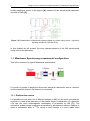
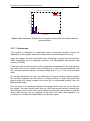
absorption of these rays by other nucleus of the same species (see Figure 1.1).
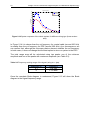
Figure 1.1 Basic scheme of Mössbauer effect
Although the theoretical principle of ME was already known many years before, no
one was capable to recreate it in the laboratory. Mössbauer realized that it was
necessary to have the radioactive sample in a solid matrix to be able to have the
emission process without recoil. As the nuclear energy levels have a very narrow
width, the energy loss due to recoil of the emitting nucleus was enough to avoid the
resonant absorption. Therefore, the insertion of the radioactive nucleus in a matrix
was the only way to obtain the effect. The spectroscopic technique based on this
effect is called Mössbauer Spectroscopy (MS).
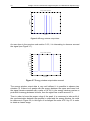
The energy levels of a nucleus in a solid are modified by its environment. MS it is
hugely sensitive to energy changes (
eV), hence it enables to study three main
interactions between the absorbent nucleus and the surrounding nucleus and
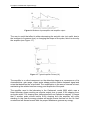
electrons (hyperfine interactions): i) the electric monopole interaction between the
nucleus and its electrons that produces a shift in the nuclear energy levels called
isomer shift (IS), ii) the electric quadrupole interaction between the nuclear
quadrupole moment and an inhomogeneous electric field that produces a splitting of
an energy level called quadrupole splitting (QS), and iii) the magnetic dipole
interaction (DI) between nuclear magnetic dipole moment and a magnetic field that
produces a further splitting of the energy levels (see Figure 1.2).
The information obtained from these interactions is useful not only in physics and
chemistry, but also in a wide range of disciplines as biology, geology or archaeology;
for instance: study mineralogy of rock, soil and dust at Gusev crater in Mars [2],
measurement of the relaxation time of ultrasonic vibrations in Fe foils [3], study of the