1
Application Note
Function Pointers in C51
APNT_129
POINTERS TO FIXED ADDRESSES
You can easily type cast numeric addresses into function pointers. There are numerous reasons
to do this. For example, you may need to reset the target and application without toggling the
reset line to the CPU. You can use a function pointer to address 0000h to accomplish this.
You may use the type casting features of Standard C to cast 0x0000 into a pointer to a function at
address 0. For example, when you compile the following line of C code...
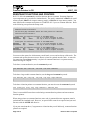
((void (code *) (void)) 0x0000) ();
... the compiler generates the following:
; FUNCTION main (BEGIN)
; SOURCE LINE # 3
0000 120000
LCALL
00H
; SOURCE LINE # 4
0003 22
RET
; FUNCTION main (END)
This is exactly what we expected: LCALL 0.
Type casting a numeric constant into a function pointer is a tricky thing. The following
description of the components of the above function call will help you understand how to better
use them.
In the above function call, (void (*) (void)) is the data type: a pointer to a function that takes no
arguments and that returns a void.
The 0x0000 is the address to cast. After the type cast, the function pointer points to address
0x0000. Note that we put parentheses around the data type and the 0x0000. This is unnecessary
if we only want to cast 0x0000 to a function pointer. However, since we are going to invoke the
function, these parentheses are required.
Casting a numeric constant to a pointer is not the same as calling a function through a pointer.
To do that, we must specify an argument list. That is what the () at the end of the line does.
Note that all parentheses in this expression are required. Grouping and precedence are
important.
The only difference between the above pointer and a pointer to a function with arguments is the
data type and the argument list. For example, the following function call...
((long (code *) (int, int, int)) 0x8000) (1, 2, 3);
... invokes a function, at address 0x8000, that accepts three (3) int arguments and returns a long.
Page 2 of 10
Revision date: 27-Apr-99