1
A3. – Fingertip vasculature and alternate site testing.
There has been a growing trend amongst modern blood glucose meters to allow for testing blood from
alternative sites, such as the upper arm, forearm, base of the thumb, and thigh. Alternate site testing is
possible only with newer blood glucose meters that require a significantly small quantity of blood (0.6µl –
1.0 µl) to generate accurate blood glucose measurements. Among the alternate-site meters currently
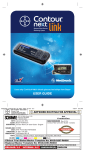
available are the Accu-Chek Active and Compact (marketed by Roche Diagnostics); the Ascencia
Breeze, Contour, DEX2, Elite, and Elite XL (Bayer); the FreeStyle Freedom and FreeStyle Flash (Abbott);
14
and the InDuo, One-Touch Ultra, One-Touch Ultra 2, and OneTouch UltraSmart (LifeScan). Each
meter’s user manual specifies what parts of the body can be used to obtain the blood sample. Sampling
blood from alternative site may be desirable, but it has some limitations. Glucose concentrations change
rapidly after every meal, injection of insulin, or exercise. The measured levels at alternate sites appear to
change more slowly than in the fingertips due to their vasculature. The fingertips are source of arterial
blood whereas alternative site testing usually test venuous blood. After one has a meal, their glucose
levels change rapidly. Arterial blood is the fastest indicator of blood since glucose is directly absorbed
into the blood stream and pumped toward the extremities. This means that alternative site test results
may be different from fingertip test results not because of the meter's ability to test accurately, but
15
because the actual glucose concentration can be different.
Recent studies over the past few years have compared the accuracy of alternate-site testing results with
results from fingertip blood glucose monitoring. The studies have generally shown that during routine
blood glucose monitoring, such as before meals or two or more hours after meals or exercise, the results
from alternate sites correspond well with results from fingertip monitoring. However, because glucose
utilization in the fingertips is faster than in the arms or other sites, when blood glucose level is falling
rapidly (e.g. immediately after exercise) or rising rapidly (e.g. right after a meal), alternate-site readings
16
lag behind fingertip readings. This could result in delayed detection of hypoglycemia or sharp changes
in blood glucose level. Therefore, alternate-site testing should not be performed directly after a meal or
exercise or when blood glucose level is low or falling. It is also recommended that users confirm low
readings from alternate-sites with a fingerstick check before treating hypoglycemia.
A4. - Who is the customer?
While the patient who uses the device is usually the primary customer, many of them seek reimbursement
from insurance companies. To ensure our product is readily received into the market we should design it
assuming the customer to be an insurance company.
A5. - Who is the user?
Our target user is the elderly population living with diabetes that currently use conventional blood glucose
monitors. Specifically, we hope users with visual and/or dexterity impairments will prefer our device over
currently distributed monitors.
14
http://www.diabetesselfmanagement.com/articles/Diabetes_Definitions/Alternate_Site_Testing
http://www.fda.gov/diabetes/glucose.html#12
16
http://americandiabetes.com/AlternateSite.htm
15
5