1
process mining
toolset
information
system
high
y
lit
bi
xi
fle
su
pp
or
t
partial case
analyst
recommendation
service
process engine
recommendation
e.g. ProM
low
groupware
ad-hoc
case
workflow handling
production
workflow
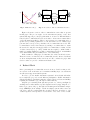
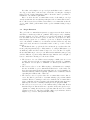
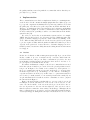
Fig. 1. PAIS trade-offs [3].
end user
e.g. Declare
process log
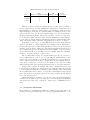
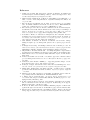
Fig. 2. An overview of the recommendation service.
Figure 2 shows an overview of the recommendation service that we present
in this paper. The process engine of some information system (or any other
system that supports processes) logs information of some sort. This information
is used by the recommendation service as a basis, i.e. it bases its recommendation
on the information in this log. Then, a user requests a recommendation for a
specific case by sending a partial case, i.e. the user sends a record of all the steps
performed in a case up to the point where the recommendation is needed. The
recommendation service then answers by sending a recommendation to assist
the user in choosing the next step(s). Such a recommendation consists of a list
of advised next steps (e.g. “call potential customer again”) combined with a
number of quality attributes (e.g. this recommendation is based on 100 similar
cases, which with a 90% probability lead to a successful sale).
In the remainder of this paper, we first introduce related work in Section 2.
Then, in Section 3, we introduce the recommendation service in more detail and
we show an implementation thereof in Section 4. We conclude the paper with
Section 5 where we provide conclusions and future work.
2
Related Work
Before presenting the recommendation service in more detail, we first provide
an overview of the work in the area of run-time flexibility in process enactment
as well as user support in flexible systems.
In order to provide flexible information systems both academia and industry recently have proposed several different paradigms for flexible information
systems. In all these paradigms exists the described trade-off between flexibility
requiring user assistance (e.g., through recommendations).
Adaptive process management systems represent one of these paradigms by
enabling users to make instance-specific adaptations and by supporting the evolution of process models (e.g., through version management and instance migration). ADEPT[11] is an example of such an adaptive system, where users can
add, delete, and move tasks during the execution. However, users have to rely
on their experience and expertise to decide when to add, delete or move a task.