1
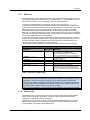
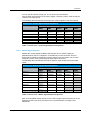
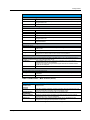
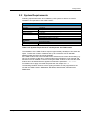
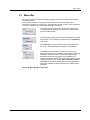
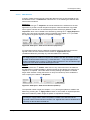
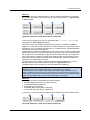
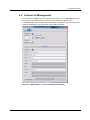
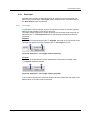
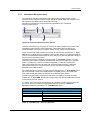
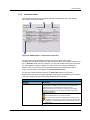
List Management Dialog Data List Management 4.1.1 Data Input The ‘Data Input’ section provides all functions to specify the data (content and amount) to be put into or to append to a data list. First of all the ‘Modulation Type’ specific settings have to be made further on the ‘Data Source’ has to be selected. 4.1.1.1 Modulation Type With the ‘Modulation Type’ selection box the required digital modulation scheme is selected. This setting does not directly affect the data list content but defines the number of ‘Bit/Symbol’ and is thus essential for a proper determination of the list length (bit count). 1 2 3 4 Figure 19: Data Input – Modulation Type Section The amount of data to be put into a data list can be specified for some of the selectable data sources (Sequence, Pattern and PRBS; see chapter 4.1.1.2 for details) by a number of ‘Symbols’ or by a quantity of ‘Bits’. For a file based data sources (Data file and Data list) the amount of data is determined by the number of data bits contained in the selected file and may thus not be modified manually. Note that the total data list length is limited to a maximum of 250 Mbit. The decision about the desired data amount specification method (via Symbols or via Bits) is made via the checkboxes associated to the Symbols/Bits boxes. If the number of specified bits results in a none integer number of symbols a warning symbols shows up above the symbols box to indicate that this would prevent a proper determination of the vector constellation of the last symbol (some bits are missing). Another warning shows up above the bits box if a PRBS sequence was selected (see chapter 4.1.1.2) as data source and the specified number of data bits would result in a none integer number of ‘used’ PRBS sequences which may for example result in synchronization and/or bit error problems if the digitally modulated signal is used for receiver test. Example: In the figure shown above the bit count based data amount specification is activated. The specified number of 512 bits results (based on the modulation type specific 7 bits/symbol) in a none integer number of 73.1 symbols. This symbol/bit mismatch is indicated by the warning sign shown above the symbols box. The warning sign above the bits box shows up since a PRBS9 (sequence length: 511 bits) was selected which would result in a none integer number of PRBS sequences. 1GP96_6E Rohde & Schwarz CDM-Toolbox 27