1
Building the module, and
choices you’ll need to
make before you start
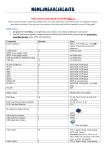
Summary: Which values
should I use in the
unmarked spaces?
Before you start:
R7 depends on the vactrol.
Silonex 32SR3 = 470Ω
VTL5C3 = 47k
This PCB was built to be flexible. Before building,
you’ll have to take four decisions:
1: Tank or Brick?
The rear PCB has space for two separate drive &
recovery circuits; one for a reverb tank and one
for the Accutronics BTDR-2 reverb brick. The real
tank sounds better, but is physically bigger and
liable to hum. The brick is small and selfcontained, with a distinctive reverb based on
PT2399 delay chips.
Only build the circuit you will be using; If
building for a spring, ignore all components in
the ‘Brick’ area. If building for a brick, ignore
all components in the ‘Spring’ area.
It is also possible to build both circuits and
attach a switch in place of the jumper, to make
the module switchable between spring and brick
2: Which vactrol?
I’ve tested the circuit with VTL5C3 and Silonex
32SR3 vactrols. Both work well, and the value of
R7 needs to change:
Silonex 32SR3 470Ω
VTL5C3
47k
If you’re using a DIY vactrol or another brand, R7
should be chosen experimentally.
3. Where will you put the tank?
Inside the case The rear PCB has space for
phono sockets so that you can easily mount a
reverb tank either inside your case. There’s a risk
that your PSU will create hum that is picked up by
the tank, so experiment with the position and
orientation of the tank.
Out the back of the case If you have, or can
make, a suitable hole in the back of your case,
probably the best way to mount your tank is
outside Hanging a tank on the wall behind your
modular is a good way to cut down unwanted
vibration and avoid transformer hum, or the tank
can be left on top of the modular where then can
Tested spring specs are:
Input: 150Ω to 800Ω
Output: 2,250Ω to 2,575Ω
Insulated input, Grounded output
Beyond this range, you may need to do some
research or experimentation.
be shaken or strummed, or next to a speaker to
encourage feedback.
Out of the front of the case There is an
alternative version of the front panel with space
for two chassis-mounted phono sockets, so you
can patch the reverb tank into the front. It makes
for a snug front panel, but is the shallowest and
most skiff-friendly solution.
4a: Which Tank?
Short version: If you’re buying a new tank, I’d
recommend one of these fairly common models:
Accutronics 9EB2C1B A big 17” long reverb
tank with six springs.
Accutronics 8EB2C1B A smaller 10” version
with three springs. This is the tank from a Fender
Blues Junior amp, so is very common.
Other makes with the same number (i.e. MOD
8EB2C1B ) will work in the same way. The Ruby
3EB2C1B also looks nice.