1
Multiplexed Mode
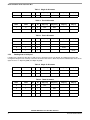
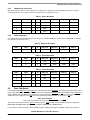
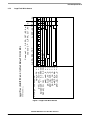
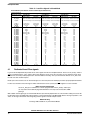
In the Multiplexed Mode the data beat can be either 8, 16 or 32 (only 16 or 32 at boot which is usually the case where this
computation affects the most).
4.4.1
Write Access
•
1 setup
•
1 address tenure
•
2 data tenures (CS assert)
•
W = number of waits states (0 to 127)
•
(4 * pci/xlb clock ratio) *
•
1 LPC processing **
•
(4 * pci/xlb clock ratio) ***
* Do not add this cycle if the transaction is a dynamic LPC bus tenure.
** Assumes the PCI Arbiter is parked on the LPC, else this number is dependent upon Local Plus Bus traffic.
*** Add these cycle(s) to the count if XLB pipelining is turned off.
For an internal clock ratio of the XLB:IPBI:PCI = 4:2:1, a minimum of 6 pci clocks+W per bus tenure is needed for back-to-back
writes.
4.4.2
Read Access
•
1 setup
•
1 address tenure
•
2 data tenures (CS assert)
•
W = number of waits states (0 to 127)
•
D = programmable dead cycles (0 to 3) to allow peripheral time to 3-state bus after read
•
1 LPC Processing (this may be masked by dead cycles if set to 1 or greater)
•
(4 * pci/xlb clock ratio) *
•
1 LPC processing **
•
(4 * pci/xlb clock ratio) ***
* Do not add this cycle if the transaction is a dynamic LPC bus tenure.
** Assumes the PCI Arbiter is parked on the LPC, else this number is dependent upon Local Plus Bus traffic.
*** Add these cycle(s) to the count if XLB pipelining is turned off.
For an internal clock ratio of the XLB:IPBI:PCI = 4:2:1, a minimum of 7 pci clocks+W+D per bus tenure is needed for back-toback reads.
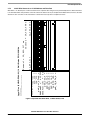
The main difference from the previous mode lies in the fact that an address tenure is needed, where the LP_ALE_b could be kept
low at most for one LP (id est PCI) clock cycle (this can be programmed to half a clock by software).
The data tenure minimum time will be 2 PCI clocks.
4.5
External Glue Logic
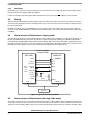
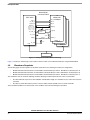
In case of the Muxed Mode of the Local Plus Bus it is necessary to add external logic to generate control signals needed by a
peripheral but not supplied by the Local Plus Bus. As mentioned above an external logic is needed to ‘latch’ or ‘register’ the
Address during the Address tenure.
NOTE: LP_OE_b and Write Enable
Not always a pair of signals like LP_OE_b and a Write Enable is needed. Some device
simply support a direct connection with the LP_R/W_b.
Some peripherals might also take a particularly long time before releasing the bus after a read access is completed. The Local
Plus Bus has a maximum of three dead cycles at the end of a transaction (which can be reduced for a READ only access to 0
via SW programming) where the bus remains tri-stated allowing such peripherals to detach from the bus without the risk of a bus
contention.
AN2458 MPC5200 Local Plus Bus Interface
Freescale Semiconductor
21